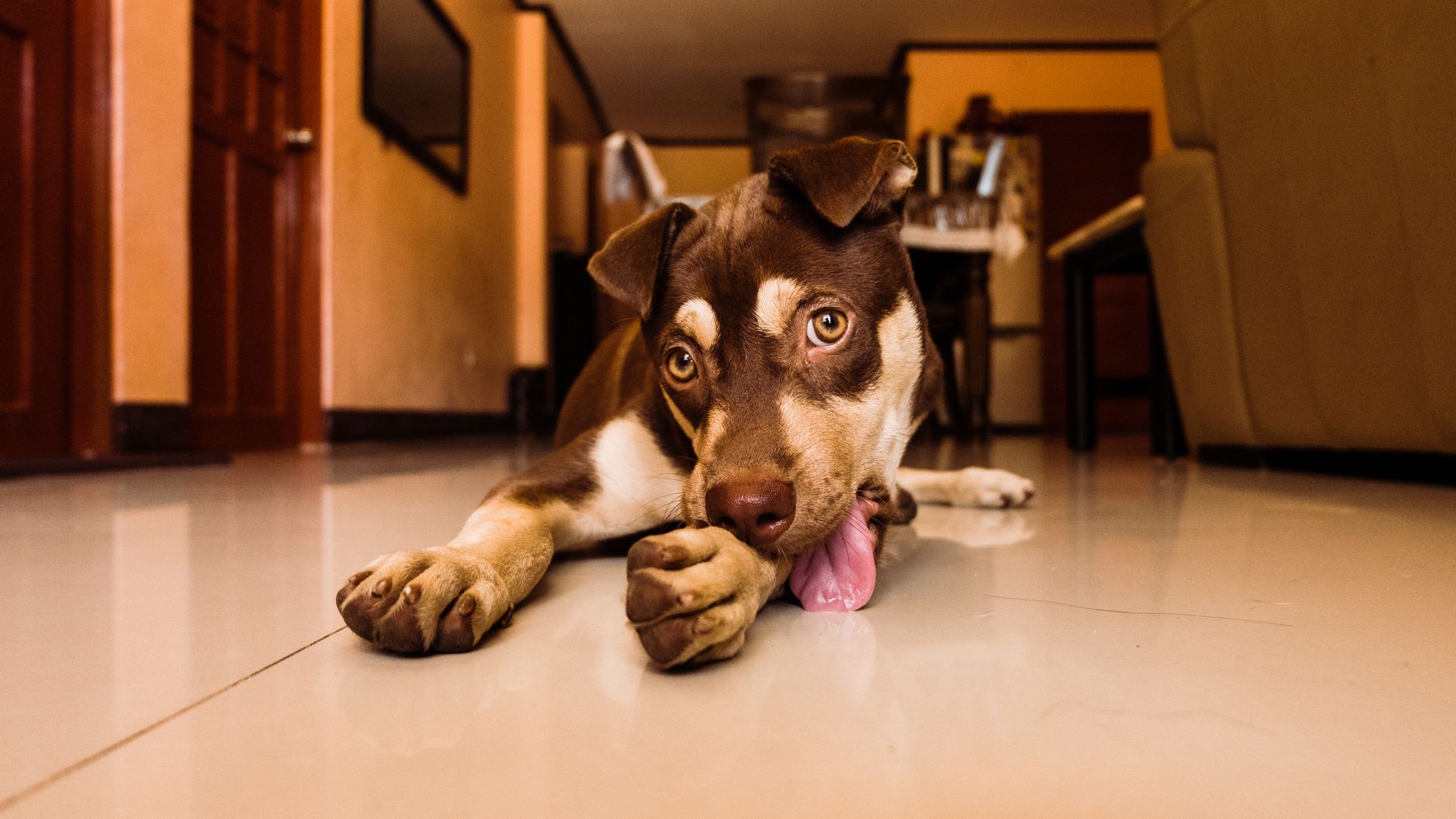
Many dogs lick their paws from time to time, but when an owner notices a dog licking or chewing the same paw over and over again, to the point of redness, smell, hair loss or limping, it often means more than just routine grooming. Instead of being a cute habit, persistent paw licking can be an early clue of discomfort, irritation or emotional stress. Because paw problems can get worse quietly, owners sometimes only react when there is obvious swelling or the dog suddenly refuses to walk. This article walks through the most common reasons for constant paw licking, practical home checks and cleaning routines, and clear signs that it is time to see a veterinarian. The goal is not to turn owners into doctors, but to make daily observations more structured and vet visits more efficient.
Normal grooming versus problematic paw licking
Before diving into causes, it helps to know where the line between normal and abnormal lies. Many healthy dogs briefly lick or nibble their paws after a walk or nap as part of regular grooming. This kind of licking is short, not focused on just one paw, and the skin looks normal in color, without odor, discharge or obvious hair thinning. In contrast, problematic licking is repetitive and intense: the dog seeks out the same paw whenever it has nothing else to do, wakes up at night to lick, or suddenly stops during a walk to chew between its toes. Over time, the fur on that paw may become discolored or sparse, and the skin may look pink, bright red, thickened or even stained brown from saliva. If the licking interferes with sleep, play or eating, or if the dog becomes protective and pulls the paw away when touched, it is reasonable to treat it as a sign of discomfort that deserves further investigation.
Environmental triggers and foreign bodies: start with the walk
For many city dogs, the story begins right after a walk. Hot asphalt, de-icing salt in colder climates, lawn chemicals, street cleaners and dirty puddles can all irritate the paw pads and the delicate skin between the toes. Some dogs are more sensitive to these irritants and show it by licking and chewing as soon as they get home. Tiny pieces of gravel, glass splinters, thorns, grass awns or even loose pet hair can also get lodged between the toes or in the fur, causing a sharp or itchy sensation. A practical routine is to gently rinse the paws with lukewarm water after outdoor walks, then pat them dry with a soft towel while checking for debris, cracks or small punctures. If you see a deep cut, an embedded object or obvious bleeding, it is safer to contact a veterinarian rather than pulling or scrubbing at home, because well‑meant attempts can drive objects deeper or delay proper treatment. Keeping a simple photo record of changes from day to day can also help the vet understand how quickly the problem is progressing.
Allergies and chronic skin problems: a common long‑term driver
When licking is not limited to the time after a walk and becomes a long‑term habit, allergies and skin conditions rise to the top of the list. Environmental allergens such as dust mites, pollens and molds can make the skin on the paws feel itchy or irritated even when there is nothing visible stuck in the fur. Indoor triggers like scented floor cleaners, air fresheners or certain detergents may also break down the natural skin barrier for sensitive dogs. Food sensitivities are another piece of the puzzle; for some dogs, certain protein sources or additives in their diet are associated with ongoing skin flare‑ups, including paw licking. Clues that point toward allergic or dermatologic issues include redness that spreads beyond the paws, frequent scratching of ears, belly or armpits, and recurrent ear problems. In these cases, home care alone is often not enough. A veterinarian can examine the whole skin surface, review diet and environment, and if needed perform skin scrapings, cytology or targeted tests to identify likely triggers. The information in this article is intended as general education; specific diagnoses and plans should always be made with a vet who can see the dog in person.
Yeast and bacterial overgrowth after prolonged licking
Constant licking keeps the paw surface warm and moist, which creates ideal conditions for yeast and bacteria to thrive. Owners may notice a sour or musty smell, greasy or sticky skin, dark pink to brown discoloration and sometimes small pustules or raw areas between the toes. In some dogs, chronic irritation leads to nodules or swollen areas in the webbing, and walking becomes clearly uncomfortable. At this stage, it is not just about itch but also pain and infection risk. Managing these more advanced cases typically calls for veterinary care, which may involve topical products, oral medication or other measures chosen based on test results. It is important for owners to avoid using human products, strong alcohol or random over‑the‑counter creams without guidance, because inappropriate ingredients or concentrations can sting, dry out the skin or cause further licking. Following the vet’s cleaning instructions carefully and attending follow‑up visits helps track whether the infection is truly settling down instead of being temporarily masked.
Stress, boredom and compulsive licking behaviors
Not every paw‑licking dog has a skin disease as the primary cause. For some, licking becomes a coping strategy for stress, frustration or under‑stimulation. Dogs left alone for long hours, those with very little exercise or mental enrichment, or dogs living in tense, unpredictable households may start licking their paws as a way to self‑soothe. Over time, this can turn into a fixed habit that continues even after the original trigger has changed. Owners might notice that licking is worst at certain times, such as when they are getting ready to leave the house, late at night when the home is very quiet or during storms and loud noises. Even if behavior plays a major role, it is still important to rule out medical discomfort, because pain or itch can be both a cause and a consequence of stress‑related licking. Vets with an interest in behavior or certified behavior professionals can help owners design a plan that includes more appropriate exercise, enrichment like sniffing walks and puzzle toys, and predictable routines. Any suggestions in this article regarding behavior are meant as general guidance only; decisions about medication or specialized behavior therapy should be made with qualified professionals.
Home paw care: gentle routines without overdoing it
When there is no emergency, owners can support paw health through simple, consistent routines. After outdoor walks, rinsing with cool or lukewarm water helps remove dust, salt and surface irritants, while careful drying between the toes reduces the dampness that encourages yeast. Floors at home can be cleaned with products that are low in fragrance and clearly labeled as safe for use around pets, and it is helpful to let surfaces dry completely before allowing the dog to walk through. For slippery or rough flooring, area rugs or mats can reduce friction and microtrauma to the pads. Trimming long fur around the paws can also make inspection and drying easier, as long as sharp tools are used cautiously or with professional help. Owners should resist the urge to try multiple new shampoos, sprays or home remedies at once, because that makes it harder to know what is helping and increases the chance of extra irritation. Any use of protective boots or an Elizabethan collar should follow veterinary advice and be introduced gradually, paired with rewards so the dog does not associate these tools with punishment.
When it is time to see a veterinarian
Knowing when to seek veterinary help is part of responsible ownership, especially for issues that affect movement and comfort. Signs that warrant a prompt vet visit include paw licking accompanied by limping or reluctance to bear weight, obvious swelling or heat in the paw, open sores, ulcers or pus, a strong foul odor, sudden escalation of licking behavior or changes in mood such as withdrawal or irritability. It is also wise to book an appointment if home adjustments and gentle care have been tried consistently for one to two weeks without any improvement, or if problems keep returning after seeming to settle. Bringing notes about when the licking started, how often it happens and what products have been used on the paws can make the consultation more efficient. Health information in this article is for general reference only and does not replace professional advice; any concerns about a specific dog should be discussed directly with a veterinarian who can perform a full examination.
Takeaway: observe, record and work with your vet
Constant paw licking is a behavior that sits at the crossroads of environment, skin health and emotional well‑being. Owners do not need to guess the exact medical term behind every symptom, but they can play a crucial role by noticing patterns early and seeking help in a timely way. By combining simple routines such as post‑walk rinsing and drying, thoughtful choice of cleaning products, appropriate exercise and mental enrichment, many dogs can stay more comfortable and avoid escalation of paw problems. Keeping photos or short notes about changes in the paws over time can also help vets track progress and adjust plans. Above all, information found online, including this article, should be treated as educational material rather than a diagnosis. When in doubt, reaching out to a trusted veterinarian remains the safest way to support a dog’s health and comfort step by step.