When a dog’s ear smells bad and the dog keeps scratching, shaking the head, or rubbing the side of the face, otitis externa is one possible explanation. Otitis externa means inflammation of the external ear canal, and it may involve excess wax, redness, discharge, pain, or swelling. However, odor and scratching alone cannot identify the exact cause. Ear mites, allergies, trapped moisture, a foreign object, and deeper middle- or inner-ear disease can produce similar signs, so persistent or recurring symptoms deserve a veterinary examination rather than a deodorizing product.
Why do smelly ears and scratching happen?
Ear odor can come from a mixture of wax, skin oils, moisture, discharge, and changes in the microorganisms living in the ear canal. The smell may be sour, musty, or unusually strong, but odor does not reliably distinguish yeast, bacteria, mites, or another cause. Scratching and head shaking usually reflect irritation, itching, or pain, while some dogs rub the ear against floors or furniture. Dogs with floppy ears, heavy ear hair, skin allergies, frequent bathing, or swimming may be more prone to ear problems because the canal can remain warm and damp, although any dog can be affected.
It may be infection—or another ear problem
Veterinarians generally approach canine otitis as a problem with several possible contributing factors. Ear mites may occur more often in puppies or dogs exposed to infected animals, while allergies can also cause paw licking, skin redness, or repeated itching elsewhere on the body. A grass seed, hair, or other foreign material can trigger sudden signs, especially in only one ear. If the middle or inner ear is involved, a dog may develop a head tilt, poor balance, abnormal eye movements, nausea, or reduced appetite. Those signs should not be managed with home cleaning alone.
How does a veterinarian find the cause?
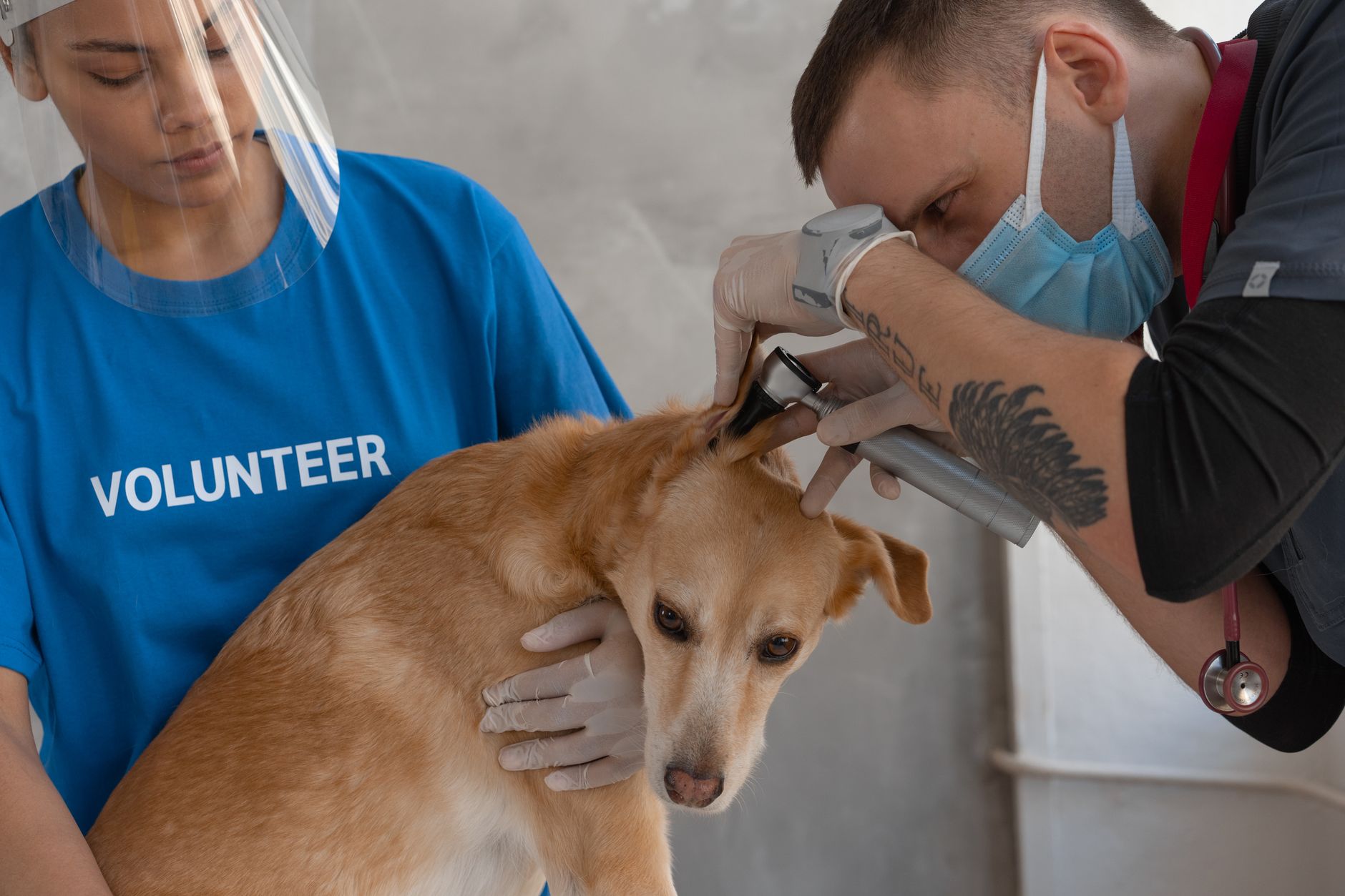
A veterinary visit usually begins with questions about when the signs started, whether the dog recently swam or had a bath, which products were used, and whether similar episodes happened before. The veterinarian may inspect the ear flap and canal with an otoscope to assess inflammation, debris, and the visible eardrum. A sample of wax or discharge can be examined under a microscope for yeast, bacteria, or mites; recurrent or difficult cases may require culture or additional testing. A painful ear or a canal filled with debris may require sedation so the examination and cleaning can be performed safely. Medication should be selected after this assessment rather than by smell alone.
What can an owner safely do at home?
While waiting for an appointment, prevent the dog from repeatedly injuring the ear flap; a properly fitted recovery collar may be useful when scratching is intense. Keep the ear dry, and use an ear cleaner only if a veterinarian has previously recommended that product and method for the dog. Do not push cotton swabs into the canal, and do not pour vinegar, alcohol, hydrogen peroxide, essential oils, or human ear medication into the ear without veterinary advice. Irritating home remedies can worsen inflammation, and the risk is greater when the condition of the eardrum is unknown. After bathing or swimming, gently dry the visible ear flap and entrance rather than probing deeply into the canal.
When should a dog see a veterinarian promptly?
Persistent scratching, frequent head shaking, foul odor, redness, pain, swelling, or discharge should prompt a veterinary appointment. A head tilt, stumbling, falling, unusual eye movements, marked nausea, or difficulty eating can indicate that the problem extends beyond the outer ear and requires faster attention. Recurring episodes also deserve investigation into allergies, skin disease, ear shape, moisture exposure, and cleaning practices. Owners can bring a list of current cleaners and medications, along with photographs of the ear and notes about symptom changes. These details help the veterinarian assess the pattern without relying on memory alone.
How can recurring ear problems be monitored?
Routine care should focus on observing the ears rather than repeatedly digging into them. Check for changes in color, warmth, moisture, odor, and visible debris, and follow veterinary guidance about whether cleaning is appropriate and how often it should occur. Overcleaning can irritate the canal, while insufficient drying after swimming or bathing may leave excess moisture. For dogs with recurrent problems, keep a record of flare-up dates, environmental or food changes, grooming, swimming, products used, and responses to prescribed care. Ear disease is an individual medical issue; this article is general information and does not replace an examination or prescription from a veterinarian.
A smelly ear with persistent scratching can be consistent with otitis externa, but it is not proof of infection. Allergies, mites, foreign material, moisture, and deeper ear disease remain possible explanations. The responsible response is to watch for pain and neurological signs, avoid irritating home remedies, and arrange a veterinary examination when symptoms persist, recur, or worsen. Clear notes about the dog’s history and home care can make the clinical assessment more useful.