Rainy weather can throw off a dog’s routine fast. When the usual walk is shorter than expected, many dogs end up with unused energy and no obvious outlet, which often shows up as pacing, barking, or nuisance chewing. The goal at home is not to exhaust a dog with nonstop activity, but to create a few short, structured games that use both body and brain. That approach fits what many veterinary and training resources recommend: safe movement, clear rules, and enough mental work to make the day feel complete.
Start with sniffing games that use the nose
For many dogs, sniffing is the most satisfying kind of indoor work. A few treats hidden around a room, tucked into a towel, or scattered near furniture legs can turn a quiet afternoon into a focused search session. This kind of game is simple to set up, but it gives the dog a clear task and a steady stream of feedback. If a household already owns a snuffle mat, treat ball, or puzzle feeder, those tools can be rotated in so the routine stays fresh.
- Hide kibble along baseboards, chair legs, or door frames
- Roll treats into a towel for a beginner-friendly search game
- Use part of a meal for scent work instead of serving it all at once
Add short search games for more movement
If a dog likes following people around the house, a hide-and-seek game can add movement without needing much space. The handler can ask for a sit or wait, hide a toy in another room, and then release the dog to go find it. This creates a mix of walking, turning, and problem-solving that works well for small homes and for dogs that get bored easily. The key is to keep each round easy enough that the dog succeeds quickly and stays interested.
- Begin in one room before making the game harder
- Hide the item in obvious places at first
- Praise the dog as soon as the item is found
Keep training sessions short and clear
Rainy days are a good time to break obedience practice into tiny sessions. A few minutes of sit, down, stay, spin, or recall can give a dog useful mental work without building frustration. Many trainers prefer short bursts because dogs tend to stay more focused when the lesson is brief and easy to understand. This is also a practical time to reinforce everyday habits, such as waiting at the door, settling before meals, or coming back to a mat on cue.
- Work on one or two cues at a time
- Reward with treats, toys, or praise
- Stop before the dog loses interest
Use interactive toys, but keep the rules safe
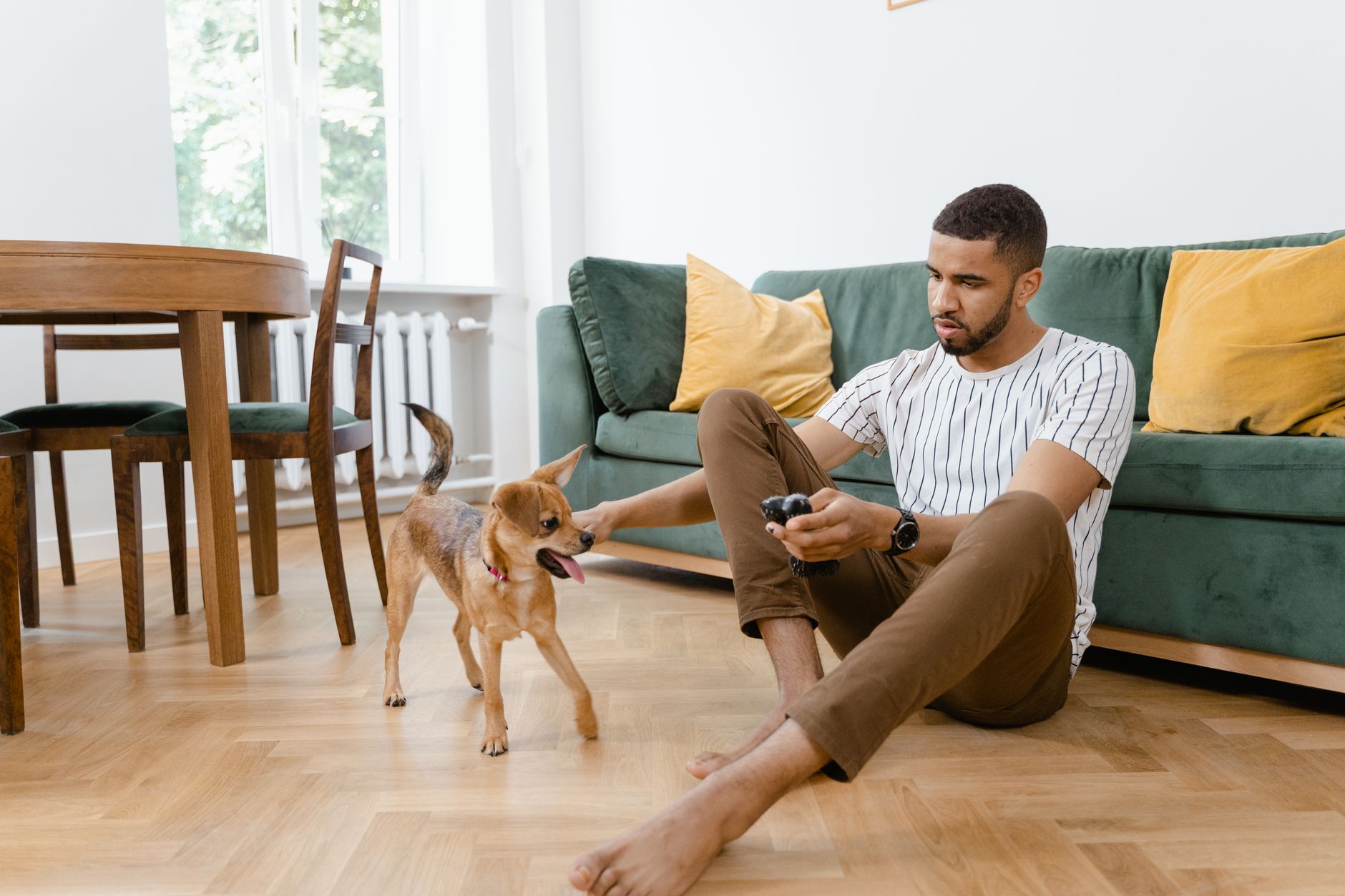
Tug ropes, treat-dispensing toys, and puzzle balls can make a rainy day feel more active, but structure matters. Tug is best for dogs that already know how to release on cue, while sensitive, young, or physically fragile dogs may need gentler games. Toys should also be sized and built to avoid easy tearing or accidental swallowing. The toy itself is less important than the routine around it: start, play, pause, and then settle back down.
- Use a clear start and drop-it cue for tug
- Choose durable toys sized for the dog
- Switch to sniffing or rest if excitement climbs too high
Leave room for rest and calm after play
A good indoor routine is not endless entertainment. Dogs usually do better when active games are followed by quiet time, so a simple rhythm like sniffing, training, interactive play, and then rest works well. After a wet outdoor potty break, it also helps to dry the paws and belly to reduce slipping and discomfort on smooth floors. Dogs that are sensitive to thunder or rain may do better with calmer activities and a quieter room. Matching the game to the dog’s personality matters as much as the game itself.
Rainy days do not have to mean a bored or frustrated dog at home. With a few short games, some easy scent work, and a little structure, a household can keep the day predictable and engaging without overdoing it. If a dog seems tired, overly aroused, or uninterested, the session is probably too long or too hard and should be scaled back. For most homes, the best rainy-day plan is simple: short, safe, and repeatable.