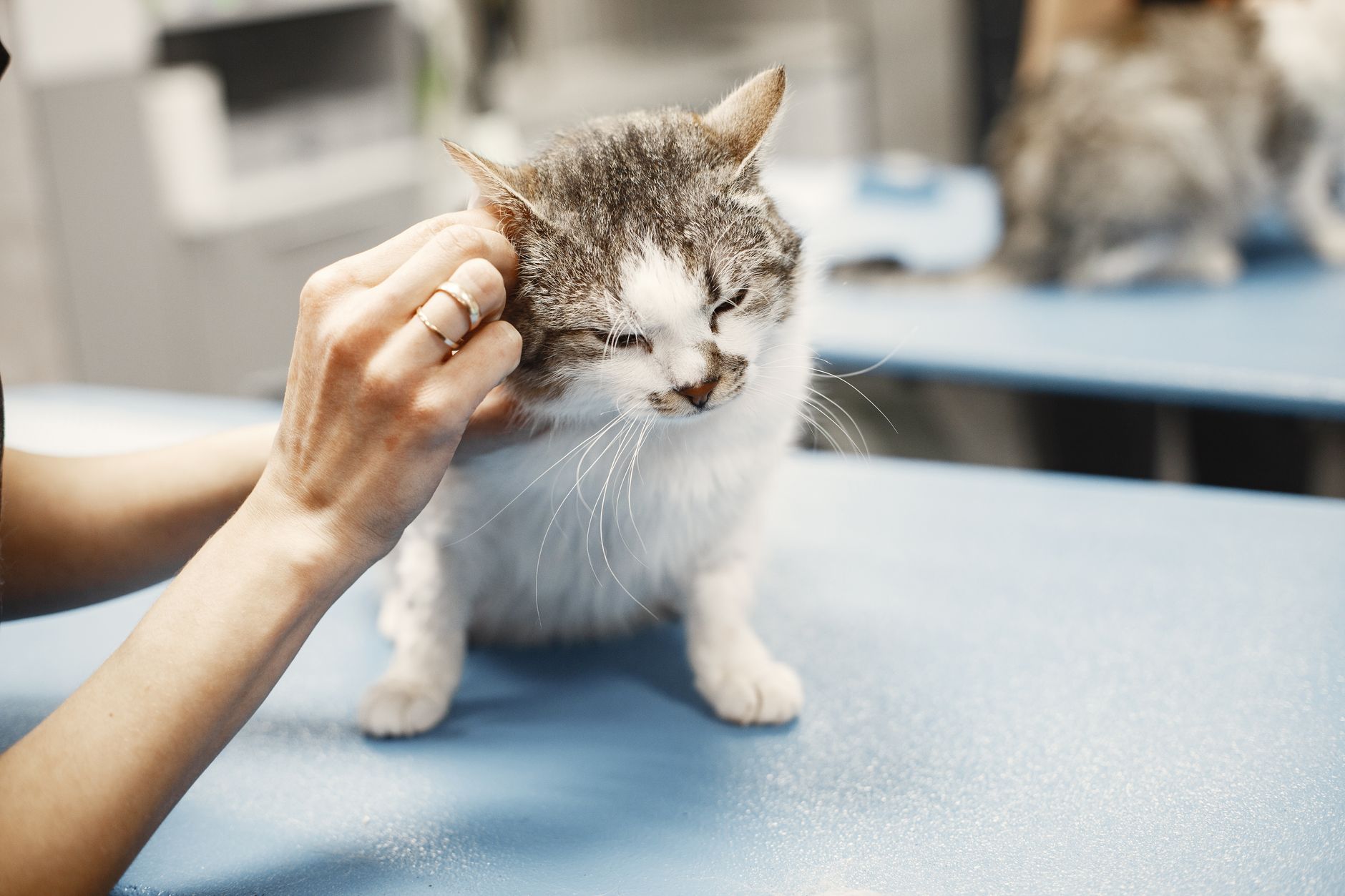
When a cat suddenly urinates outside the litter box, the behavior should not be dismissed as spite, laziness, or poor training. Urinary inflammation, stones, obstruction, kidney disease, diabetes, stress, household changes, and litter box aversion can all produce similar signs. Veterinary guidance generally places medical screening first, followed by an assessment of behavior and environment. Caregivers can make the appointment more useful by noting where the urine appears, how much is produced, how often the cat visits the box, and whether straining or vocalization occurs.
First distinction: a full puddle or a small spray
Urine marking usually happens while the cat is standing, with the tail raised or twitching, and involves a small amount sprayed onto a vertical surface such as a wall, furniture side, door, or window. A marking cat may still use the litter box normally, while choosing prominent locations that carry territorial or social meaning. Ordinary inappropriate elimination is more often seen on horizontal surfaces such as floors, bedding, clothing, or rugs, and the volume may be larger. These patterns are clues rather than diagnoses, because pain, anxiety, and environmental conflict can overlap and a sick cat may also show marking-like behavior.
Medical conditions that can look like a behavior problem
Bladder inflammation, urinary crystals, bladder stones, urinary infection, and feline idiopathic cystitis may change a cat’s frequency, urgency, or comfort during urination. Kidney disease and diabetes can also alter urine volume and drinking behavior. Warning signs include repeated litter box trips, passing only small amounts, straining, crying, licking the genital area, blood in the urine, hiding, reduced appetite, or a sudden change in mood. Cats often conceal pain, so a cat that still eats or seeks attention may still need an examination. A veterinarian may recommend a physical examination and urinalysis, with blood tests or imaging when the history suggests a broader problem.
Urinary blockage requires emergency attention
A cat that repeatedly strains but produces little or no urine may have a blocked urethra, especially if the cat is male. Painful vocalization, vomiting, weakness, hiding, and loss of appetite make the situation even more urgent. Caregivers can mistake straining to urinate for constipation, so the key question is whether normal urine is actually appearing in the box. Suspected blockage is an emergency and requires immediate veterinary contact; do not give human painkillers, diuretics, or leftover antibiotics, and do not wait for the cat to “settle down” before seeking care.
If the exam is clear, assess stress and the home
When testing does not identify an obvious medical cause, review recent changes such as moving, new furniture, a new person or animal, conflict between cats, unfamiliar cats outside the window, altered work hours, or longer periods alone. The litter box may be too small, too dirty, strongly scented, difficult to reach, or placed near a noisy appliance. In multi-cat homes, one cat may block access or guard the route without obvious fighting. Stable routines, quiet box locations, predictable access, and observation of cat-to-cat interactions can reveal triggers more effectively than punishment, which may increase fear and concealment.
Litter box setup and cleaning details
Provide enough boxes for the household and place them in separate, easy-to-reach areas rather than grouping every box together. The box should allow the cat to turn around, dig, and enter comfortably; older cats or cats with mobility limitations may need a lower entrance. Remove waste regularly and use a gentle, low-fragrance cleaning approach. Accident sites should be cleaned with a product designed to break down urine odor rather than covered with perfume, because residual scent can draw the cat back. If changing litter or box style, introduce the new option gradually and keep a familiar option available during the transition.
What to record before the veterinary visit
Write down the time and location of each incident, the approximate urine volume, the cat’s posture, box visits, drinking, appetite, vomiting, and energy level. In a multi-cat household, a camera or short period of supervised separation may help identify the affected cat, but observation should never delay emergency care. Bring medication details, previous diagnoses, diet information, and notes about recent household changes. A clear history helps the veterinarian separate medical urination, urine marking, and litter box preference issues. This information is educational only; diagnosis and treatment decisions should come from a veterinary professional.
The safest sequence is simple: rule out illness first, then address behavior and the environment. A small spray on a vertical surface may suggest marking, while repeated straining, blood, pain, or inability to urinate should be treated as a medical warning. Avoid punishment and self-medication. Careful observation, timely veterinary assessment, and thoughtful litter box adjustments give the cat a safer path back to predictable toileting.