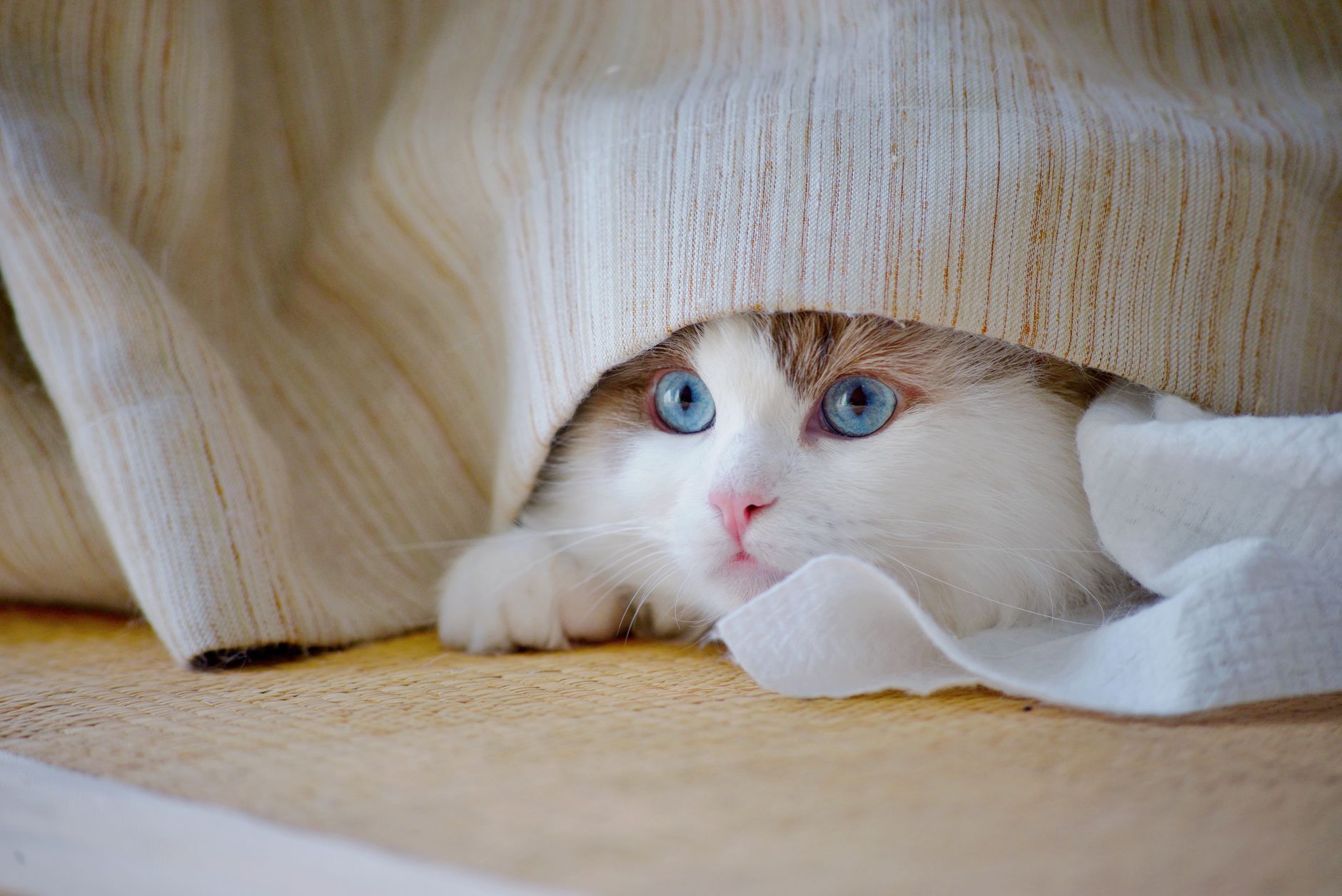
Start with the signs, not the label
Cats rarely announce stress in a direct way. More often, they reveal it through small changes in posture, vocalizing, eating, litter box habits, or how willing they are to interact. A cat that suddenly hides more, hisses sooner, or stops acting like itself is sending information that deserves attention. Veterinarians commonly advise owners to treat these changes as clues, not as “bad behavior,” because the same pattern can also point to discomfort or illness.
The most common behavior changes
Stress in cats often shows up as hiding under beds, staying behind furniture, or keeping distance from people and other pets. Body language can shift too: ears pinned back, dilated pupils, a tense body, a low tail, or a tail that flicks sharply. Another common sign is overgrooming, especially on the belly or inner thighs, sometimes followed by patchy fur loss. Litter box changes also matter, including urinating outside the box, spraying, or a sudden change in bowel habits.
When meowing turns into a warning sign
Some cats become much noisier when they are stressed. They may call out at night, meow repeatedly, or even growl and hiss at family members who were previously safe and familiar. Others swing the opposite way and withdraw from touch, play, and eye contact. These shifts are important because they often show that the cat feels uneasy in the current setting. If the change lasts more than a short period, the owner should look at what has changed at home rather than assuming the cat is being difficult.
Why stress and illness can look alike
Stress behaviors can overlap with medical problems, which is why owners should not rely on behavior alone. A cat that stops eating, avoids the litter box, or grooms excessively may be reacting to a new environment, but it may also have urinary tract discomfort, skin irritation, or another health issue. Vets typically start by ruling out physical causes and then reviewing possible triggers such as moving house, visitors, new pets, noise, or a changed routine. That broader view is often the fastest way to understand what the cat is communicating.
What owners can observe at home
The most useful first step is to track patterns. Note when the behavior started, what was happening in the house, whether the cat reacts to a specific room or person, and whether eating, drinking, urinating, or defecating changed at the same time. In multi-cat homes, it also helps to check whether food bowls, litter boxes, and resting spots feel crowded or contested. These details give the vet a clearer picture and make it easier to separate a temporary reaction from a more persistent pattern.
When a vet visit should move up the list
If a cat stops eating, hides constantly, pants, urinates repeatedly outside the box, licks a body area until fur thins, or suddenly becomes more aggressive, a vet check is worth prioritizing. Stress may be part of the picture, but pain and other medical causes need to be ruled out first. Early evaluation also gives owners practical guidance on environment changes and behavior support, which is usually more effective than waiting for the problem to settle on its own.