Growing from a kitten into an adult cat involves more than a larger body. Feeding patterns, food formulas, litter equipment, bowls, toys, and travel gear may all need gradual changes. Many cats move toward adult food around one year of age, but maturity varies by breed, size, and individual development; larger breeds may need kitten nutrition for longer. The practical approach is to upgrade the items used every day first, keep familiar routines where possible, and change only one or two variables at a time.
How to tell whether it is time for adult food
Kittens are still building bone, muscle, and body tissue, so their diet should be formulated for growth rather than selected simply because the package looks premium. Veterinary nutrition guidance commonly uses about one year of age or physical maturity as a reference, using the later point when they differ. A large-breed kitten may mature later, while a cat with a medical condition, unusual weight change, or a prescription diet needs an individualized plan from a veterinarian.
Look at the whole picture: is the cat still growing quickly, is weight stable, has activity changed, and are appetite and stools consistent? Adult food is not automatically better than kitten food; it is designed for a different life stage and daily maintenance pattern. Check the life-stage statement and complete-and-balanced claim on the label, then decide whether dry food, wet food, or a combination fits the household schedule and the cat’s preferences.
Make the food transition gradual
A sudden switch can create digestive upset or make a cautious cat reject the bowl. A common plan is to begin with about one-quarter adult food, increase the proportion every few days, and reach a full adult formula only when appetite and stool remain normal. Sensitive cats may need a ten- to fourteen-day transition rather than a one-week schedule.
- Days 1–2: about 75% kitten food and 25% adult food.
- Days 3–4: half kitten food and half adult food.
- Days 5–7: about 25% kitten food and 75% adult food.
- Day 8 onward: move to all adult food if the cat is comfortable.
If vomiting, loose stool, or a clear drop in appetite appears, slow down and return to the last well-tolerated ratio. Seek veterinary advice if the problem persists or the cat becomes unusually quiet. Avoid changing the food brand, treats, supplements, and litter at the same time, because multiple changes make it difficult to identify the cause of a reaction. Recheck the feeding guide and calorie density of the new food rather than copying the old portion by weight.
Upgrade bowls, wet food routines, and feeders
Kittens often eat smaller meals more frequently, while adult cats may fit more easily into a regular household schedule. Dry food is convenient for storage and timed feeding, whereas wet food adds moisture to the meal and requires careful refrigeration after opening. Mixed feeding can work well, but the calories from both foods must be counted together; a pouch or can described as a topper may still contribute a meaningful amount to the daily intake.
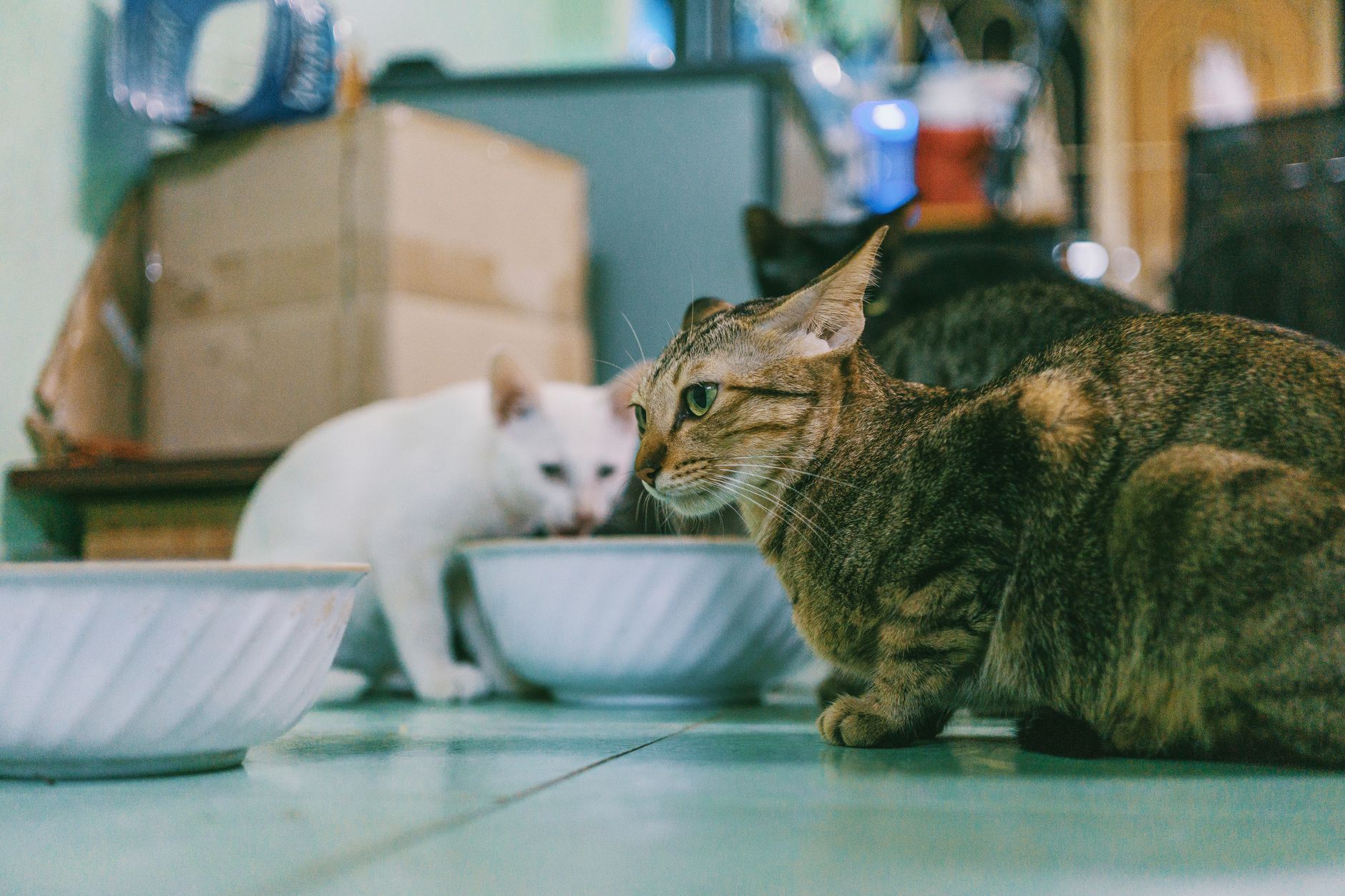
A wide, low-sided bowl is often easier to wash and may be more comfortable for cats that dislike their whiskers touching the rim. Stainless steel and glazed ceramic are practical choices when kept free of chips and cracks. An automatic feeder can be useful for measured dry-food portions, but review dispensing consistency, jam risk, cleaning access, battery backup, and replacement parts before buying. In multi-cat homes, separate feeding stations may matter more than advanced features because they make individual portions easier to monitor.
Choose a litter box that fits the adult body
A low-entry box is convenient for a small kitten, but the same box may become cramped as the cat grows. When a cat cannot turn around, dig, or squat comfortably, it is time to consider a wider model or a larger open box. Covered boxes can contain scattered litter and reduce visual clutter, but some cats dislike narrow entrances or trapped odors, so appearance alone should not determine the choice. Place the box away from loud appliances, busy doorways, and food and water bowls.
Litter type also affects long-term cost and cleaning effort. Clumping litter allows spot removal, while mineral, tofu, wood, and other materials differ in dust, weight, odor control, tracking, and disposal requirements. The best match depends on the cat’s paw preference, household ventilation, and how often the caregiver can scoop. In a multi-cat home, test a new litter separately and avoid changing the box, litter, and location all at once.
Match toys, scratchers, and carriers to the adult cat
Lightweight kitten toys may no longer be suitable when an adult cat can bite through strings or pull off small parts. Inspect feathers, bells, seams, elastic, and plastic pieces regularly, and put wand toys away after supervised play. Scratching equipment should match the cat’s preferred movement: a cat that stretches upward needs a stable vertical post, while a floor scratcher suits a cat that scratches horizontally. Stability matters because a wobbly post can make a cat abandon it even when the surface is appealing.
Travel gear deserves a size check as well. A carrier that worked for a kitten may become too narrow for an adult, so the cat should be able to sit, turn, and adjust position without being compressed. Look for a firm base, good ventilation, secure fasteners, and washable surfaces rather than choosing only by appearance. Harnesses should be introduced indoors in short, calm sessions. For most indoor cats, safe and easy-to-clean equipment is more useful than a carrier with a long list of features.
Plan upgrades by need and ongoing cost
When the budget is limited, prioritize complete life-stage food, a washable bowl, a correctly sized litter box, and a secure carrier before buying a large collection of toys. Next, check whether the current feeder dispenses reliably, whether the water station is easy to clean, and whether the cat can move comfortably through the home. Changing one or two items at a time preserves familiar smells and routines while making it easier to see whether a new product actually suits the cat.
A simple three-level plan can keep spending practical: essential items include food, bowls, litter equipment, and safe travel gear; convenience items include an automatic feeder, water fountain, and tracking mat; optional items include a large cat tree, camera, or decorative accessories. Include filters, batteries, replacement trays, litter, cleaning products, and warranty coverage in the ownership cost. The lowest shelf price is not always the lowest long-term expense.
The move from kittenhood to adulthood works best as a series of small, observable adjustments rather than one large shopping trip. Transition food slowly, recalculate portions, resize the litter box when the body outgrows it, and inspect toys and carriers for wear. Persistent vomiting, diarrhea, refusal to eat, or a marked change in energy warrants veterinary attention instead of repeated home experiments. This article is for general pet-care information and is not a substitute for individualized veterinary advice.