- Veterinarian Formulated: Developed by veterinarians to meet specific canine wellness needs.
- Natural Ingredients: Contains a blend of wild yam, bee pollen, and botanicals.
- Easy Administration: Chewable format makes it easy for dogs of all sizes.
- Daily Wellness Support: Supports normal urination and bladder function.
USD 38.99
EntirelyPets
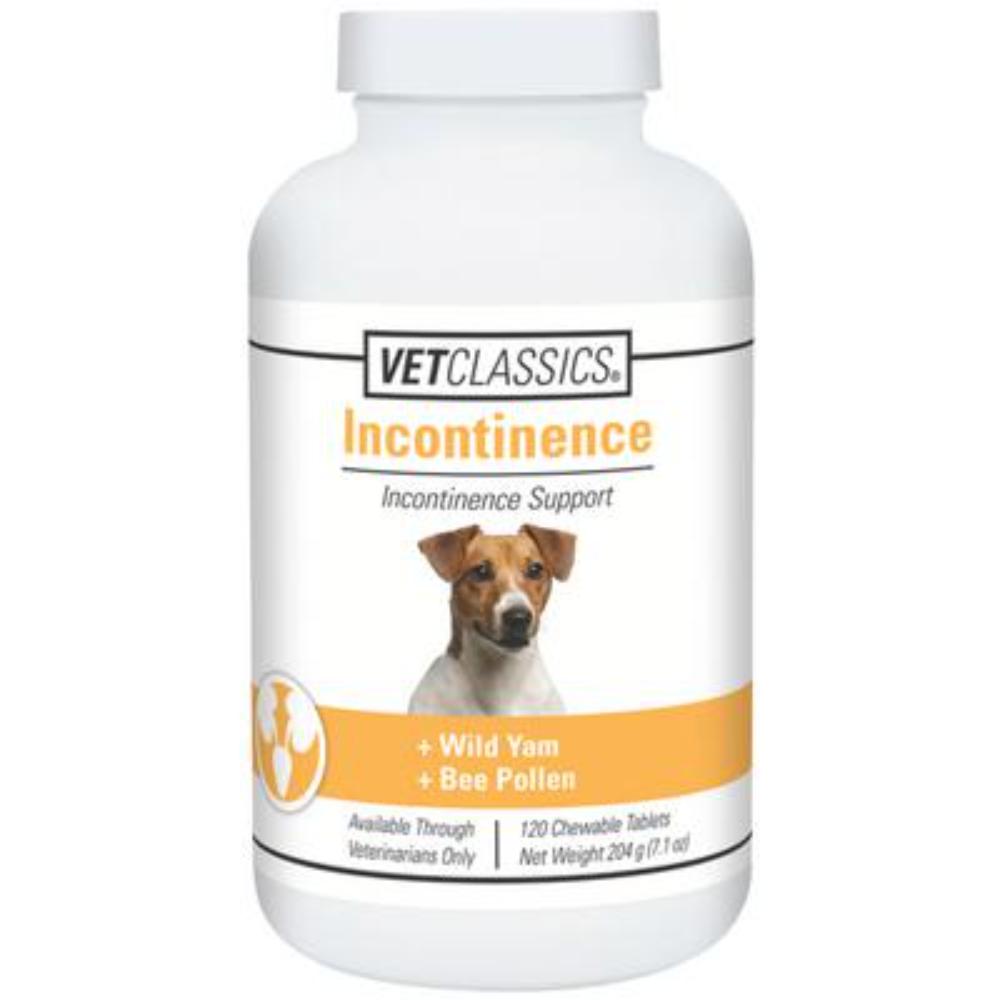
Vet Classics Canine Incontinence Support Chewable Tablets
USD 38.99
Specs
Standard(Default)
Canine Incontinence
Canine Health Supplement
Veterinarian Formulated
Daily Health Care
Chewable Supplement
Buy from vendor
Product Details
Description
Description
Vet Classics Canine Incontinence Support Chewable Tablets is a veterinarian-supplied supplement formulated to support targeted animal wellness needs.
Key Benefits
- Supports normal healthy bladder control and urination.
- Features wild yam, bee pollen, rehmannia, and botanicals.
- Chewable tablet format for dogs.
Ingredients
Ingredients
Active Ingredients: Wild Yam Root 315 mg, Bee Pollen 210 mg, Rehmannia 158 mg, Angelica sinensis 79 mg, Psoralea 79 mg, Glandalai 53 mg, Licorice 21 mg per tablet.
Inactive Ingredients: Dicalcium Phosphate, Distilled Monoglycerides, Magnesium Stearate, Microcrystalline Cellulose, Natural Flavoring, Silicon Dioxide.
Useful Information
Directions for Use
- Up to 50 lb: 1 tablet twice daily.
- 51–75 lb: 2 tablets twice daily.
- Over 75 lb: 3 tablets twice daily.
Use only as directed by your veterinarian. Keep out of reach of children and animals.
Frequently Asked Questions
What are the main ingredients in Vet Classics Canine Incontinence Support Chewable Tablets?
The main ingredients include wild yam, bee pollen, rehmannia, and other botanicals that support normal bladder function and urination in dogs.
How should I give these tablets to my dog?
The dosage is adjusted based on your dog's weight. For dogs up to 50 lb, give 1 tablet twice daily; for those 51–75 lb, give 2 tablets twice daily; and for dogs over 75 lb, give 3 tablets twice daily.
Can I use these tablets for my puppy?
These chewable tablets are suitable for dogs of various sizes. However, it is best to consult your veterinarian regarding the appropriate use for puppies.
Are there any side effects of using this supplement?
While the product is formulated with natural ingredients, it is important to monitor your dog for any adverse reactions and consult your veterinarian if you have concerns.
Is it safe to use these tablets long-term?
Vet Classics Canine Incontinence Support Chewable Tablets are designed for regular use. However, it is recommended to consult your veterinarian for long-term usage guidance.
Recommended Products
Recommended Articles
Can Cranberries Support Pet Urinary Health? What Owners Should Know
Can cranberries support urinary health in dogs and cats? This practical guide reviews the evidence, product risks, feeding choices, and urgent warning signs.

Long-Term Management of Canine Atopic Dermatitis
Learn the key points for long-term care of canine atopic dermatitis, from home environment control to skin care and follow-up visits, with veterinary guidance.
Do Calming Supplements Really Help Dogs and Cats?
Do tryptophan and alpha-casozepine help anxious pets? Learn what research suggests, where evidence is limited, and how to use supplements safely.