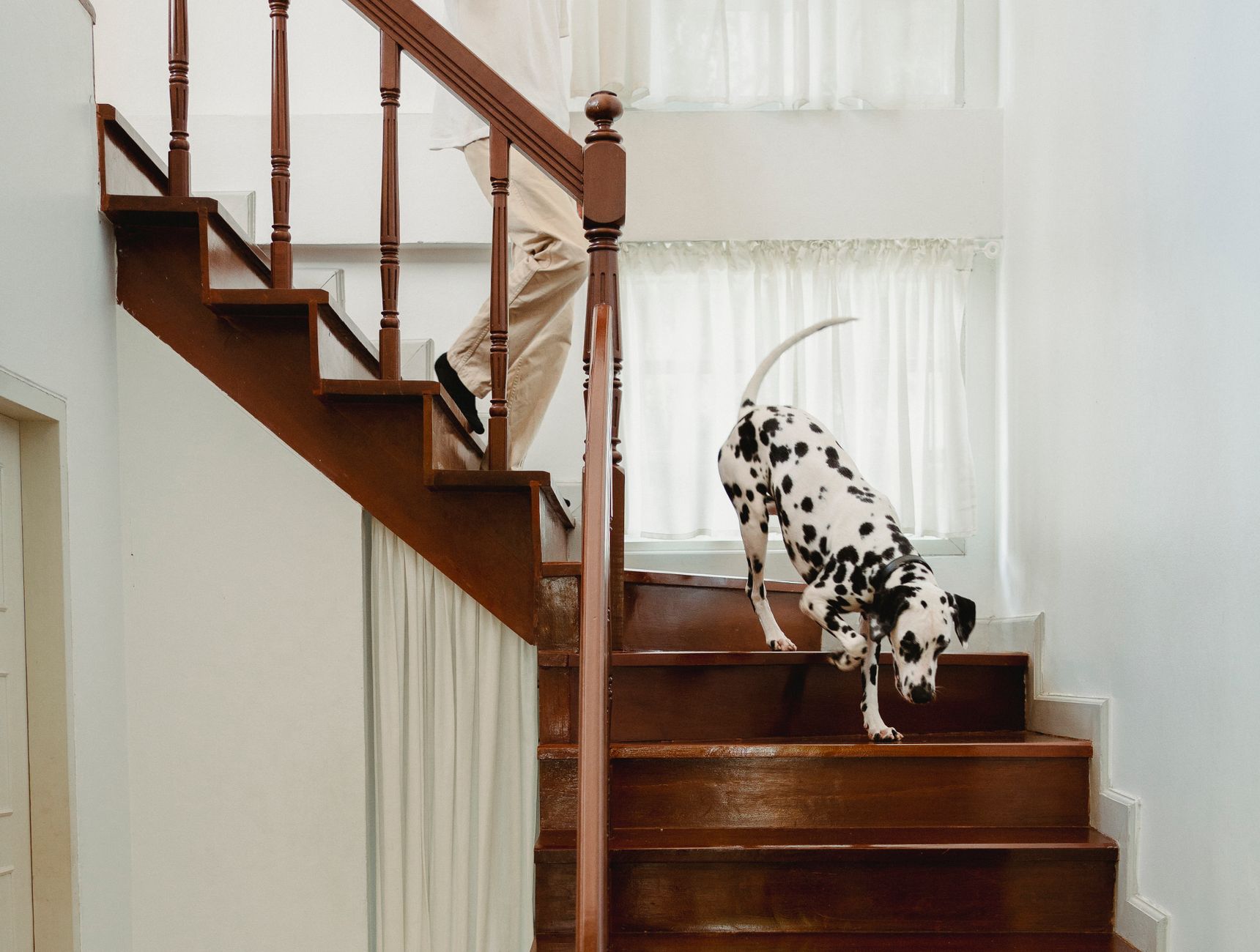
Many owners first notice joint issues when their dog starts moving more slowly on the stairs or pausing at the top and bottom before taking each step. It is easy to assume a dog is simply getting lazy or older, but subtle changes in stair use are often among the earliest signs that joints are stiff or painful. Going up and down stairs demands coordinated work from multiple joints and muscles, so any discomfort in the hips, knees, shoulders, or elbows can quickly show up in this specific movement. Recognizing these early signals and talking with a veterinarian about appropriate examinations and care strategies can help maintain a dog’s comfort and mobility over time. All information here is for general reference and does not replace professional advice.
Why stairs reveal early joint problems in dogs
Using stairs is a complex motion in which the body’s weight repeatedly shifts and is carried over height differences. When a dog climbs, the hind limbs provide most of the push; when going down, the front limbs absorb more of the load and braking force. If any of these joints are stiff or sore, each step becomes more demanding, and the dog often responds by slowing down or hesitating. Owners may notice that a dog still walks reasonably well on flat ground but suddenly becomes cautious on stairs, taking shorter steps, pausing between steps, or carefully testing the surface. This pattern of “difficulty with specific movements” is commonly seen in early joint degeneration and mild osteoarthritis. Once such changes appear regularly, it is worth considering a veterinary assessment to understand what is happening beneath the surface.
Common early signs when a dog slows down on stairs
Early joint degeneration rarely starts with dramatic limping. Instead, it tends to appear as small changes in speed and movement quality. Typical signs include a dog standing at the base of the stairs to think before climbing, or taking each step slowly rather than trotting up as before. Going down may look even more careful, with shorter, tentative steps and a stiff posture. Some dogs begin to move with both hind legs closer together, using them almost like a single unit to share weight instead of alternating each leg. Others refuse stairs altogether and wait for the owner to carry them. After using stairs, a dog might walk stiffly for a short time or show a slight limp that fades with continued movement. When these behaviors become frequent rather than occasional, they often indicate that stair use is physically uncomfortable, not just a matter of mood or stubbornness.
Mobility changes beyond the staircase to watch for
To understand a dog’s joint health, it helps to look beyond how they use stairs and consider daily mobility as a whole. Many dogs with early joint problems take longer to get up from lying down or seem to rearrange their paws before they can stand comfortably. Walks that used to be long and enthusiastic may shorten over time, with the dog choosing to turn back sooner or following behind the owner instead of leading the way. Dogs that once jumped easily onto the bed or sofa may begin to stand beside the furniture, look up, and wait for help instead of jumping on their own. Play sessions may also become shorter, with chasing games or ball play ending sooner because the dog lies down to rest. These changes are sometimes mistaken for a dog simply “settling down with age,” but they can also reflect that moving has become more physically demanding.
Factors that can contribute to joint degeneration in dogs
Age is only one part of the story when it comes to joint degeneration. Body weight, breed, previous injuries, exercise style, and home surfaces can all play meaningful roles. Large breeds such as Golden Retrievers, Labradors, and German Shepherds are widely known to be more prone to hip and knee issues, especially if they grow quickly or carry extra weight. Past injuries, such as ligament tears or fractures, may leave nearby joints more vulnerable to wear over time. Indoors, slippery flooring or steep staircases can make every climb or descent harder, increasing the strain on joints and muscles. No single factor explains joint problems in every dog, but looking at the overall picture can help owners understand why their dog may be slowing down and what can be adjusted in the environment and routine.
Making stairs more “joint-friendly” at home
Even if a household cannot avoid stairs entirely, owners can still reduce the physical challenge and risk for their dogs. One of the simplest steps is to improve traction, using non-slip rugs, stair treads, or adhesive strips so each paw has a more secure grip. In homes with steep staircases, keeping a dog’s main living area on one floor or adding ramps in frequently used locations can limit the number of stair trips needed. Smaller dogs or those showing clear difficulty may benefit from ramps beside beds and sofas, allowing them to reach favorite resting spots without jumping. When accompanying a dog on stairs, an owner can slow their own pace, give the dog time to place each foot carefully, and use calm verbal cues to reduce anxiety. These modest environmental changes often make everyday movement more manageable for dogs with sensitive joints.
When to seek veterinary evaluation for stair-related issues
Occasional stiffness or slower movement on cold days can be common, but certain patterns suggest that a veterinary visit would be wise. If a dog consistently refuses to go up or down stairs, freezes at the top or bottom, or needs to be carried regularly, professional assessment is recommended. Additional warning signs include limping after stair use, lifting one leg frequently, or showing marked reluctance to walk even on flat ground. Behavioral changes also matter; some dogs react when specific joints are touched by pulling away, becoming tense, or showing other signs of distress. A veterinarian can use physical examination, discussion of history, and, when appropriate, imaging studies to distinguish osteoarthritis from ligament injury, spinal issues, or other conditions. This article provides general information only; decisions about diagnosis or treatment should be based on direct consultation with a qualified veterinarian.
Everyday care strategies to support joint comfort
Once a veterinarian has helped clarify what is happening with a dog’s joints, owners can focus on practical daily habits that reduce strain. Keeping body weight within a healthy range is one of the most powerful ways to lower pressure on hips and knees, and may involve adjusting food portions or activity levels. In terms of exercise, controlled walks and gentle hill work are often more joint-friendly than intense jumping or abrupt stop-and-start games. Choosing a resting spot with supportive bedding can help joints feel more at ease during sleep and relaxation. Various joint-support products and assistive devices exist, and whether they are appropriate depends on the individual dog and veterinary guidance. Above all, paying attention to how a dog moves—how long they take to stand up, how they walk on different surfaces, and how their expression changes with activity—gives owners valuable information to share with their vet and to guide ongoing care.
Conclusion: Treat “moving more slowly” as meaningful feedback
When a dog slows down on stairs, falls behind during walks, or cuts playtime short, these behaviors are more than just quirks of personality. They may represent subtle feedback from the body that certain movements are becoming harder. Taking this feedback seriously does not mean assuming the worst; instead, it encourages owners to look at the environment, body weight, exercise type, and medical evaluation as complementary pieces of the picture. Thoughtful adjustments at home, combined with timely veterinary input, can make daily life more comfortable for many dogs, even as they grow older. The observations and suggestions in this article are intended only as general guidance. For specific questions about a dog’s mobility or joint health, professional advice from a veterinarian should be the primary reference.