For many cat owners, toy shopping starts with a couple of feather wands and quickly turns into a drawer full of gadgets that only a few favorites ever leave. This article focuses on how to match toys to a cat’s real needs instead of chasing every new trend. The approach is to look at age, temperament, daily routine and home layout, then use concrete examples to explain which designs are more practical in everyday life. Along the way it covers safety details like loose parts and materials, how much space toys take up, and what cleaning and ongoing costs look like, so owners can avoid buying items that end up in storage while their cats still prefer cardboard boxes.
Understand your cat’s natural play style first
Before buying more toys, it helps to watch how a cat plays when nothing special is provided. Some cats are chasers that love fast movement, sprinting after feather wands, strings or small balls. Others are explorers that enjoy quietly investigating boxes, tunnels and puzzle toys where they can paw and dig. Older cats may have lower energy and prefer soft mats, slow‑moving balls or simple scratching boards instead of high‑intensity games. Over a few days, owners can note which activities the cat starts on its own, such as whether it likes jumping to higher shelves, responds to laser pointers or reacts strongly to sound. These observations give clearer direction than product photos and reduce the chance of buying high‑tech toys for a cat that mostly enjoys hiding under blankets or watching outside from the windowsill.
Put safety checks ahead of cute designs
Even though most toys are marketed for pets, they are still physical objects with parts that can break or be chewed off, so safety should be the first filter. Common materials include plastic, fabric, feathers and elastic cords, and each has its own weak points. Toys with tiny glued‑on pieces or loose stitching can shed parts that kittens or cats who like chewing might try to swallow. It is generally safer to choose simple, sturdy constructions and avoid designs with many decorative small pieces. Home‑made setups using rubber bands or thin strings need extra attention, because elastic cords can wrap around a neck or paws if left unattended. For battery‑powered toys, owners should check that battery covers are secure and do not pop open under impact, and that there are no sharp edges around openings. If there is any doubt about how a particular toy might behave when chewed, dragged or dropped, it is better to keep it for supervised play only and store it away when leaving the house.
Feather wands and interactive sticks: everyday staples with wear‑and‑tear
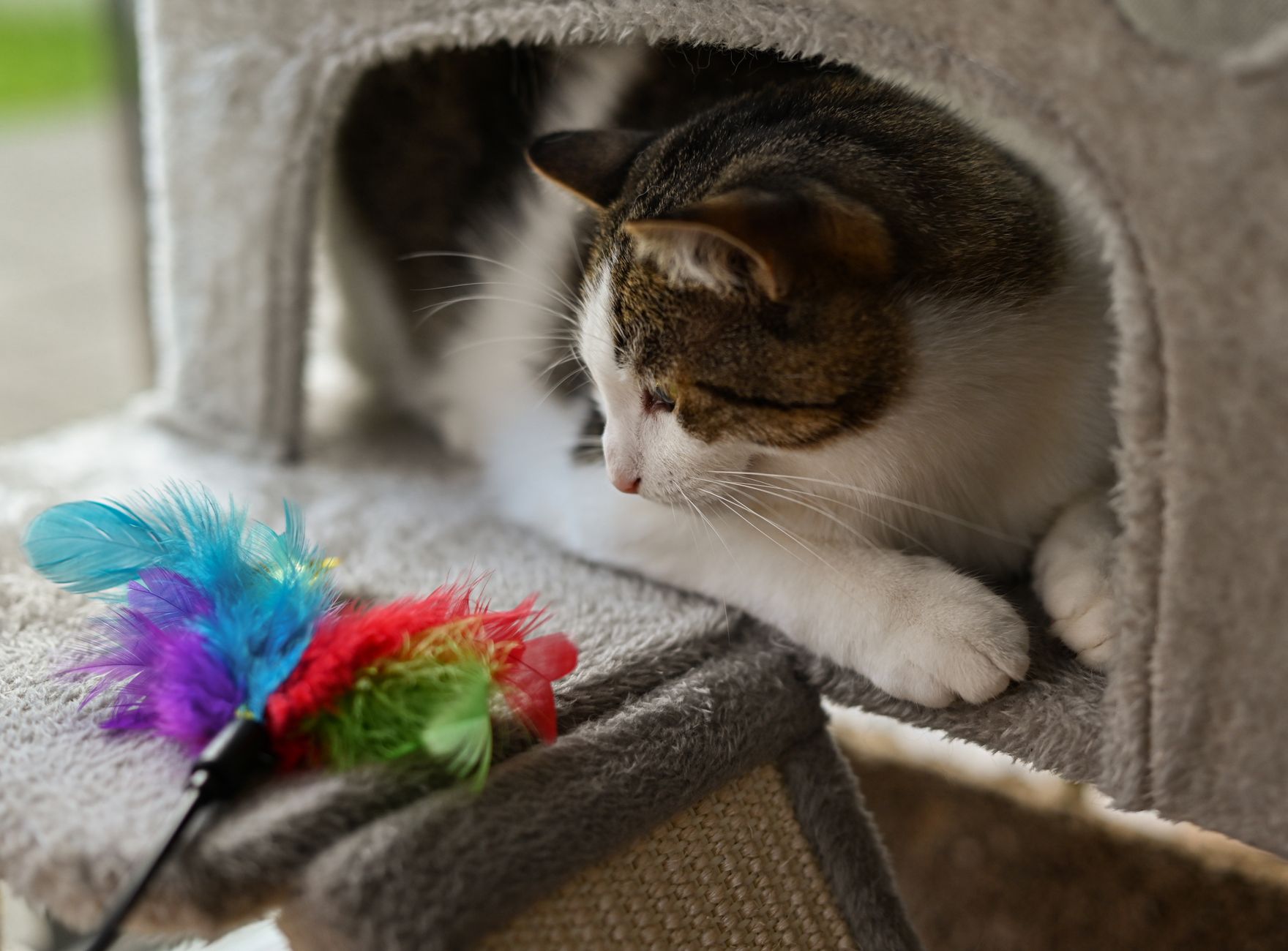
Feather wands and similar interactive sticks are staples in many homes because they are inexpensive and flexible in how they can be used. A good wand lets the owner control height, speed and direction, creating short sprints or jumps without moving furniture around. When choosing one, handle length and weight matter more than they first seem; a wand that is too short or heavy can cause wrist strain during longer sessions. The rod material, often plastic or fiberglass, affects durability, as thinner rods may snap when a strong cat repeatedly pounces. At the tip, soft cords or fabric attachments are usually safer than hard wire or rigid plastic that can poke a mouth. Play sessions with wands work best when they follow a simple hunting rhythm: search, chase, catch and a clear end point. Finishing with a chance to “catch” the toy and then offering regular food or a small treat helps many cats feel satisfied, instead of abruptly stopping while the cat is still highly aroused.
Puzzle feeders: keeping indoor cats occupied between naps
Puzzle feeders combine play and food by hiding kibble or treats inside a ball, track or box with holes. As the cat bats and rolls the toy, pieces of food fall out in small amounts. These toys are especially useful for indoor cats that get bored easily and tend to look for trouble, because they give a structured activity when the owner is busy. However, they only work if the cat is genuinely interested in the food used; a cat that is already picky may ignore the toy completely. From a practical standpoint, puzzle feeders that can be opened up and rinsed thoroughly are easier to keep in rotation. Designs with narrow crevices can trap crumbs and oils, leading to smell and hygiene issues if not cleaned regularly. Owners also need to consider overall food intake and adjust meal portions so puzzle feeders do not quietly add extra calories on top of regular meals. If a cat has specific health needs or weight‑management goals, discussing feeding methods with a veterinarian can help decide whether puzzle play fits its routine.
Automatic and battery‑powered toys: convenience with trade‑offs
Automatic toys such as motorized feather bases, self‑moving mice or erratic balls are designed to keep moving even when the owner is not actively playing. They can be a good fit for young, high‑energy cats, but there are practical trade‑offs around noise and durability. Motor sounds vary widely between products, and some cats will avoid toys that hum, click or buzz too loudly. It is useful to check whether the toy offers multiple speed modes and whether it behaves differently on hard floors versus rugs. Durability depends on the quality of the housing and how well moving parts are protected from claws and bites. Replaceable attachments, like feather posts that can be swapped out when worn, make long‑term use more realistic. Power sources also matter: toys that require frequent battery changes add ongoing cost, while rechargeable units need a charging routine to stay in use. For kittens and senior cats, faster settings and sudden changes in movement can be overwhelming, so initial sessions should be supervised and kept gentle, with adjustments based on the individual cat’s reactions.
Scratching boards, tunnels and other static play setups
Static play elements often shape a cat’s daily environment more than owners realize. Scratching boards and posts give cats a place to stretch and work their claws, which can reduce scratching on sofas and door frames if placed thoughtfully. When picking a board, size and weight are key: a board that is too small may only suit kittens, while a very light one can slide away when a cat pushes against it and discourage use. Tunnels, cardboard boxes and simple fabric hides serve as ambush spots and race tracks, especially for cats that enjoy darting in and out or playing hide‑and‑seek. These items do not need electricity, but they still require occasional inspection for wear. Cardboard can fray and shed pieces, and fabric tunnels may develop tears with metal rings exposed, which could scratch fur or skin. In multi‑cat homes, placing several scratching surfaces and hiding spots in different areas allows each cat to find a preferred base, cutting down on competition over a single post or tunnel.
Match toy sets to age, energy level and living space
Toy combinations work best when they follow the realities of age and living conditions rather than a generic list. Kittens are curious and energetic but still developing coordination, so soft wands, light balls and low tunnels are generally safer than tall climbing structures or very fast automatic toys. Adult indoor cats often benefit from a mix of scratching posts, vertical spaces, puzzle feeders and regular interactive play, which helps channel energy into predictable routines rather than furniture damage. Senior cats may appreciate softer surfaces, slower toys and lower platforms that do not require big jumps, and may spend more time watching than chasing. In compact apartments, oversized trees and multiple tunnels can crowd the space, so foldable tunnels, wall‑mounted scratchers and multipurpose furniture with simple platforms may be more realistic. Multi‑cat households usually do better when toys are spread out, with separate zones for interactive play and quiet retreats, so that not every interest point becomes a source of tension. When toy reactions hint at possible health or behavioral concerns, such as extreme agitation or complete avoidance, owners can treat them as clues and consult a veterinarian or qualified behavior professional for tailored advice.
Think about storage, cleaning and long‑term use
The way toys fit into daily routines often depends more on maintenance than on their advertised features. Feather wands and string toys can quickly become tangled if they do not have a designated place, turning each play session into a few minutes of untangling before anything fun happens. Puzzle feeders that take too long to clean or never fully dry may be used once and then pushed to the back of a cupboard. When deciding what to buy, it helps to picture where each toy will be cleaned, dried and stored, and favor designs that can be rinsed and aired out without fuss. Long‑term use also depends on how easily worn parts can be replaced, such as scratching surfaces or feather tips, and whether those spare parts are commonly available. Regularly reviewing the toy collection and removing items that are damaged, rarely used or awkward to store keeps the play corner inviting rather than cluttered. Over time, most homes end up with a small group of toys that fit both the cat’s preferences and the owner’s routines, and these core items usually provide more value than a large number of rarely used gadgets.