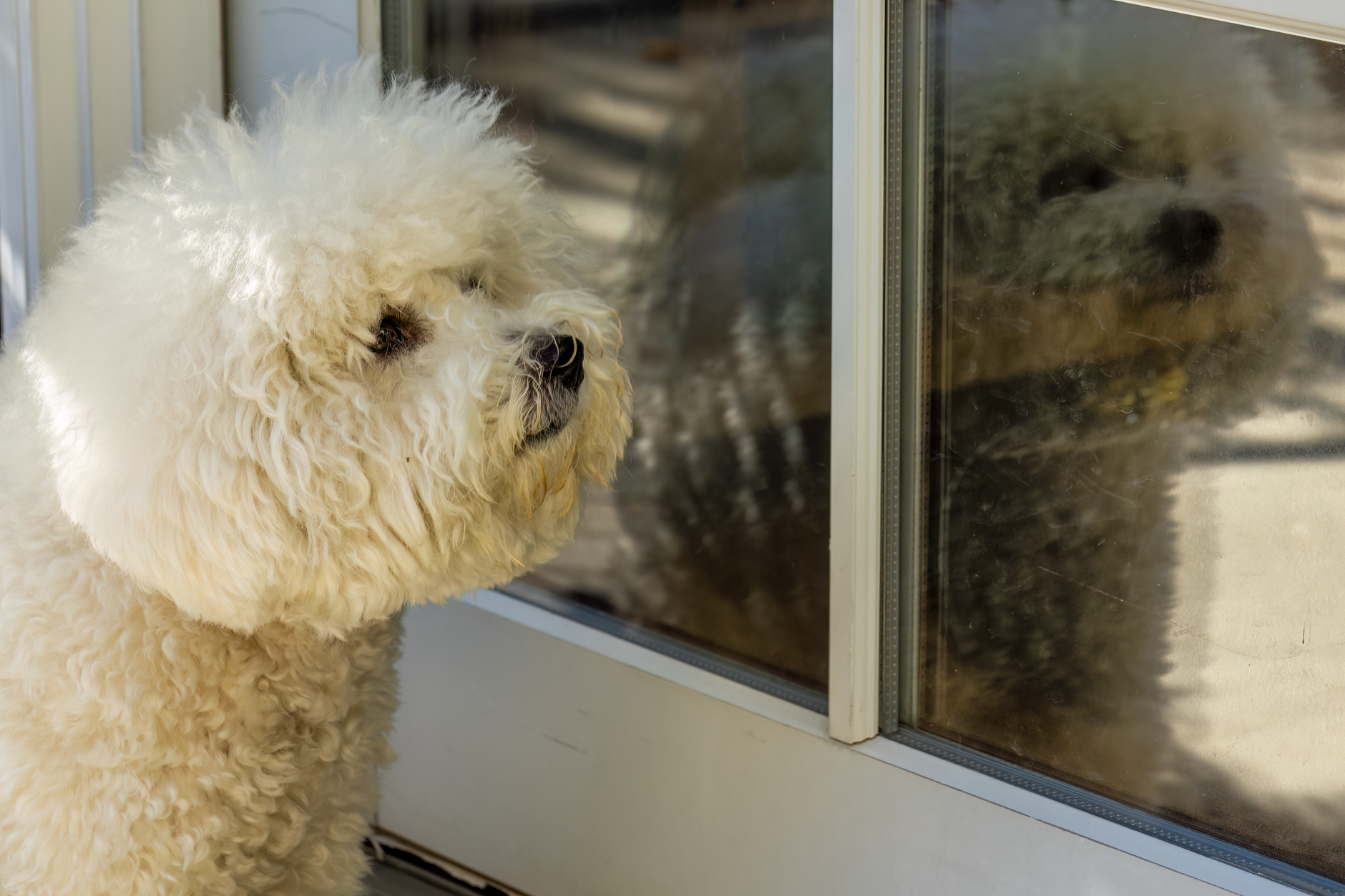
A dog that panics when a guardian reaches for the keys, puts on a coat, or walks toward the front door may be showing separation-related behavior. Barking, pacing, scratching doors, destroying furniture, house-soiling, or refusing food during an absence can indicate distress rather than deliberate misbehavior. Scolding rarely addresses the underlying problem and may make departures and reunions more tense. A practical plan begins with observation, reduces opportunities for panic, and uses very short absences that gradually become longer while the dog remains comfortable. This is general pet-care information; dogs showing severe distress or self-injury need veterinary assessment.
How to Recognize Separation-Related Distress
Common signs include persistent barking or whining after the guardian leaves, pacing, panting, drooling, hiding, escape attempts, destructive chewing, house-soiling, and extreme excitement at reunion. Some dogs become anxious before departure when they notice keys, shoes, bags, or a particular morning routine. Similar behavior can also result from outside noises, confinement, boredom, incomplete house training, pain, urinary disease, or age-related changes, so one symptom alone does not establish separation anxiety. A home camera can show when the behavior starts, how long it lasts, whether the dog can eat, and what happens immediately before the distress. A behavior log and video are useful information to share with a veterinarian.
Manage the Environment Before Training
The first goal is to keep the dog from repeatedly reaching a state of panic. If every workday involves hours of barking, scratching, or frantic escape attempts, the departure routine may become an increasingly strong trigger. During training, some families use a trusted friend, in-home sitter, qualified dog walker, daycare, or flexible work arrangement to shorten unavoidable absences. Before leaving, provide an appropriate toilet break, calm physical activity, and opportunities to sniff, but do not assume exercise alone will resolve the problem. Curtains, steady background sound, a comfortable rest area, and a safe food puzzle may reduce distractions. Any toy or chew left unattended must be suitable for that individual dog and unlikely to break apart or be swallowed.
Use Graduated Departures
Graduated departure training starts below the dog’s anxiety threshold. Begin with simple exercises such as walking into another room, closing a door for a few seconds, and returning while the dog remains relaxed. Later, practice picking up keys, putting on shoes, or opening the front door without actually leaving, so these cues no longer predict a long absence every time. The first outdoor departures may last only a few seconds. Return before clear distress begins, such as frantic pacing, repeated vocalizing, heavy panting, scratching, or refusing a valued treat. Once the dog is consistently comfortable, increase the duration slowly and sometimes vary it rather than adding time in a rigid pattern. If the dog struggles, shorten the next attempt and rebuild from an easier step.
Make Departures and Arrivals Predictable but Calm
Many dogs react to the preparation period long before the guardian leaves. Practicing the normal departure routine at neutral times can make keys, coats, bags, and shoes less meaningful. The guardian should move calmly, avoid prolonged emotional goodbyes, and place the dog in a familiar rest area with an appropriate enrichment activity. On returning, a brief quiet greeting is usually preferable to an intense reunion; interaction can continue once the dog’s body language and breathing settle. If the dog fears the entryway, begin relaxation exercises farther inside the home and gradually bring the mat, treats, and calm activities closer to the door. Predictability matters, but the training should remain flexible enough to match the dog’s actual response.
When to Involve a Veterinarian or Behavior Professional
Veterinary help is appropriate when a dog injures itself, breaks teeth, repeatedly collides with doors or crates, vomits, refuses food, has heavy drooling, loses bladder control, or shows severe panic within minutes of departure. Sudden behavior changes also deserve a medical review because pain, gastrointestinal problems, urinary conditions, neurological disease, or sensory changes can affect behavior. A veterinarian can review the history, watch videos, assess physical health, and refer the family to a qualified behavior professional when needed. For moderate or severe cases, prescription medication may be discussed alongside behavior modification. Medication must be selected and monitored by a veterinarian; it is not a substitute for a gradual training plan and should not be obtained or adjusted without professional direction.
Mistakes That Commonly Set Training Back
A frequent mistake is testing a dog with a long absence before short departures are reliable. Another is punishing destruction or accidents after returning home; the dog is unlikely to connect a later reprimand with an earlier event, and the punishment can make future reunions more stressful. Increasing walks while ignoring departure cues, confinement issues, or the dog’s emotional response is another incomplete approach. Owners may also overlook early signs because the dog is quiet on camera but remains tense, refuses food, or repeatedly checks the door. Keep a simple record of departure length, body language, food interest, and recovery time. These details make it easier to identify patterns and decide when professional support is needed.
Helping a dog cope with being alone is usually a gradual care project rather than a quick obedience exercise. The most useful starting point is to identify the earliest trigger, find the shortest absence the dog can tolerate calmly, and repeat successful experiences without rushing progression. Consistent routines, temporary care during unavoidable absences, environmental safety, and professional guidance can work together. If progress stalls or distress intensifies, a veterinarian and qualified behavior professional can help tailor the plan to the dog’s medical history, temperament, and home routine. This information is for general education only and does not replace individualized veterinary advice.