Fluffy long-haired cats and dogs are often the stars of the household, but behind the soft coat there is a very practical issue: tangles and tight mats. Many owners only notice something is wrong when they feel hard lumps while petting, or when the groomer tells them the coat cannot be brushed out easily. Matting is more than an aesthetic concern; when hair clumps tightly against the skin it traps shed hair, dust and moisture, which can make the skin area less comfortable. Veterinarians frequently remind owners that for long-haired breeds, coat care should be treated as part of basic husbandry, not as an occasional beauty treatment. Building a simple, regular grooming routine at home helps keep the animal more comfortable and makes veterinary or salon visits smoother.
Why do long-haired cats and dogs mat so easily?
Understanding why mats form is the first step to preventing them. Long guard hairs are more likely to twist around each other, and many long-haired breeds have a thick undercoat underneath, so movement, rolling on the floor or playing outdoors can quickly create tangles. Areas under constant friction, such as under the collar or harness, behind the ears, in the armpits and along the inner thighs, are typical trouble spots. Older pets who groom themselves less, or animals with reduced mobility, may also accumulate more loose hair on the coat. If brushing is irregular, small knots can gradually tighten into firm mats. Knowing these high-risk zones helps owners focus their checks instead of only looking at the visible back and tail while missing the hidden areas where problems often begin.
Choosing the right tools: brushing without painful pulling
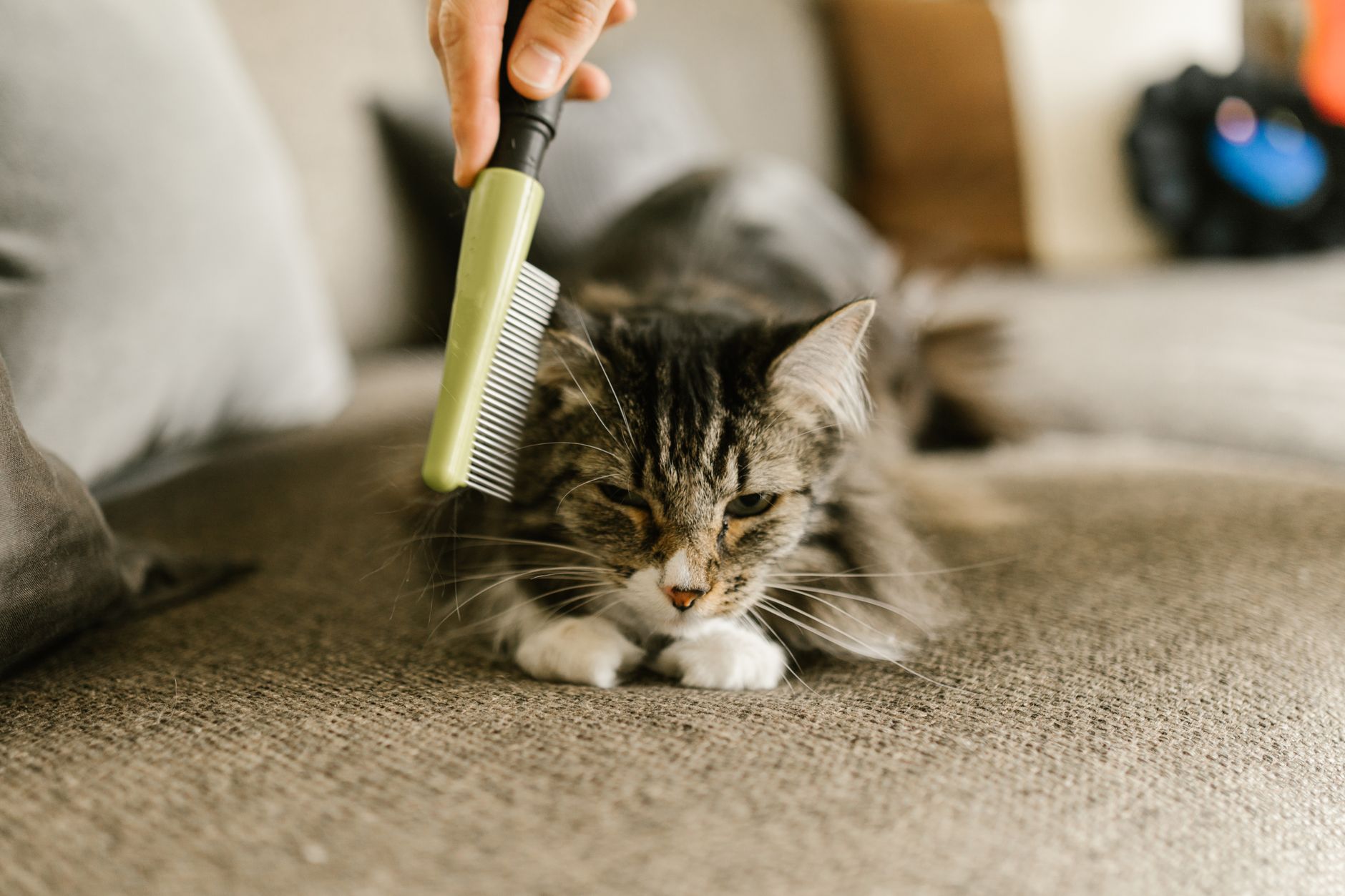
One generic plastic comb is rarely enough for managing a long, layered coat. In practice, different tools serve different purposes. A slicker brush is useful for lifting loose undercoat, a metal comb helps glide through the topcoat, and a small dematting tool can target local tangles. A metal comb with even teeth is ideal for everyday work from hair tips back toward the roots, while slicker brushes need to be used with light pressure so the pins do not scrape the skin. If the coat has already formed hard mats, forcing a slicker brush through can be painful; in that situation, it is better to use a dematting tool combined with careful trimming, staying away from the skin. When choosing tools, owners should consider whether the handle feels secure in hand and whether the teeth are smooth and free of sharp burrs. Comfortable tools make it easier to keep up with grooming and reduce the risk of skin scratches.
A simple home brushing routine: work in sections from tip to root
Daily grooming does not need to be complicated, but a few key steps can make it much more pleasant for the animal. Many groomers recommend starting on a stable table or floor, calmly petting the dog or cat before introducing the brush. Begin with an easy-to-tolerate area such as the back or rump, using the rule of “from tip to root.” Hold a small section of hair gently with one hand and work through the ends with a comb using the other hand, instead of dragging the brush directly from the skin outward. Once the outer layer feels smooth, switch to a finer tool and systematically check behind the ears, around the neck, under the arms, along the belly and on the inner legs. Each brushing session can be short, as long as it happens regularly—daily or every other day makes a big difference. For animals that are nervous about brushes or noise, pairing grooming with calm praise and small treats, plus short breaks, can slowly turn brushing into a predictable, less stressful interaction.
When mats are already tight: what can you safely do at home?
Sometimes owners discover the problem only after mats are dense and tight against the skin. In these cases, it is important not to rush in with regular scissors right at the skin surface, because it is very easy to cut the skin accidentally. A safer home approach is to feel out the full size of each mat, gently separate the mat into smaller chunks, and use a dematting tool to loosen the outer parts before any trimming. Throughout the process, watch the pet’s reactions; if the animal shows clear signs of pain or strong resistance, it is better to stop and seek help. When the skin under the mat is already red, moist, has an odor or looks damaged, a veterinary visit or professional grooming appointment should be arranged promptly to assess whether clipping, cleaning or further examination is needed. Any suggestions on home handling are for general information only; concrete medical decisions are best made with a veterinarian who can evaluate the individual case.
Bathing and drying: key steps for long-haired coats
Many matting problems become worse after baths, especially when long coats are left partially damp or when the hair is roughly rubbed with towels. Before bathing, it is very helpful to brush out obvious tangles; this reduces the chance that they will tighten when wet. During the bath, make sure shampoo and conditioner are thoroughly rinsed out so that no residue remains on the hair and skin, which can make strands stick together. When drying, use warm air rather than very hot air, keep the dryer a reasonable distance from the skin, and lift sections of hair with one hand while drying and combing with the other. Allowing the animal to roll around while still damp often leads to new tangles, so it is better to keep them on a non-slip surface until the coat is dry. In homes without strong drying equipment, owners can consider shorter baths and more frequent spot cleaning combined with consistent brushing, instead of long, irregular bathing that the coat cannot recover from easily.
Watching the skin and body language: when to call the vet
Grooming time is also an opportunity to check the skin. As you part the hair, look for redness, rashes, bald patches, scabs or any unusual smell. Notice whether the cat or dog flinches or reacts strongly when certain areas are touched, as this may signal discomfort. Keeping notes or photos of worrying spots can be helpful when discussing the situation with a veterinary clinic. For pets with known allergy or skin history, owners should be careful about introducing new grooming products and avoid harsh chemicals. The information in this article is meant to support everyday care decisions but does not replace a professional examination; when there is clear irritation, pain or sudden changes in the coat or behavior, contacting a veterinarian for tailored advice is strongly recommended and often prevents problems from escalating.
Turning grooming into a shared routine: responsibility and quality of life
Over time, coat care can become more than a chore; it can be a quiet daily ritual that reinforces the bond between the animal and the person. Many owners find that setting a fixed grooming time—such as a few minutes after dinner or before bed—helps both the human and the pet know what to expect. Regular brushing keeps the coat softer to the touch and also allows early detection of changes in weight, skin and mobility. From a veterinary perspective, good coat management is part of overall comfort and welfare, rather than simply cosmetic grooming. By investing a little effort in learning about tools and gentle techniques, most long-haired cats and dogs can be kept reasonably well maintained at home. When a situation feels beyond your skill or confidence, seeking help from a groomer or veterinarian is not a failure of care, but a responsible step that supports the animal’s wellbeing.