Why puppies bite hands and people
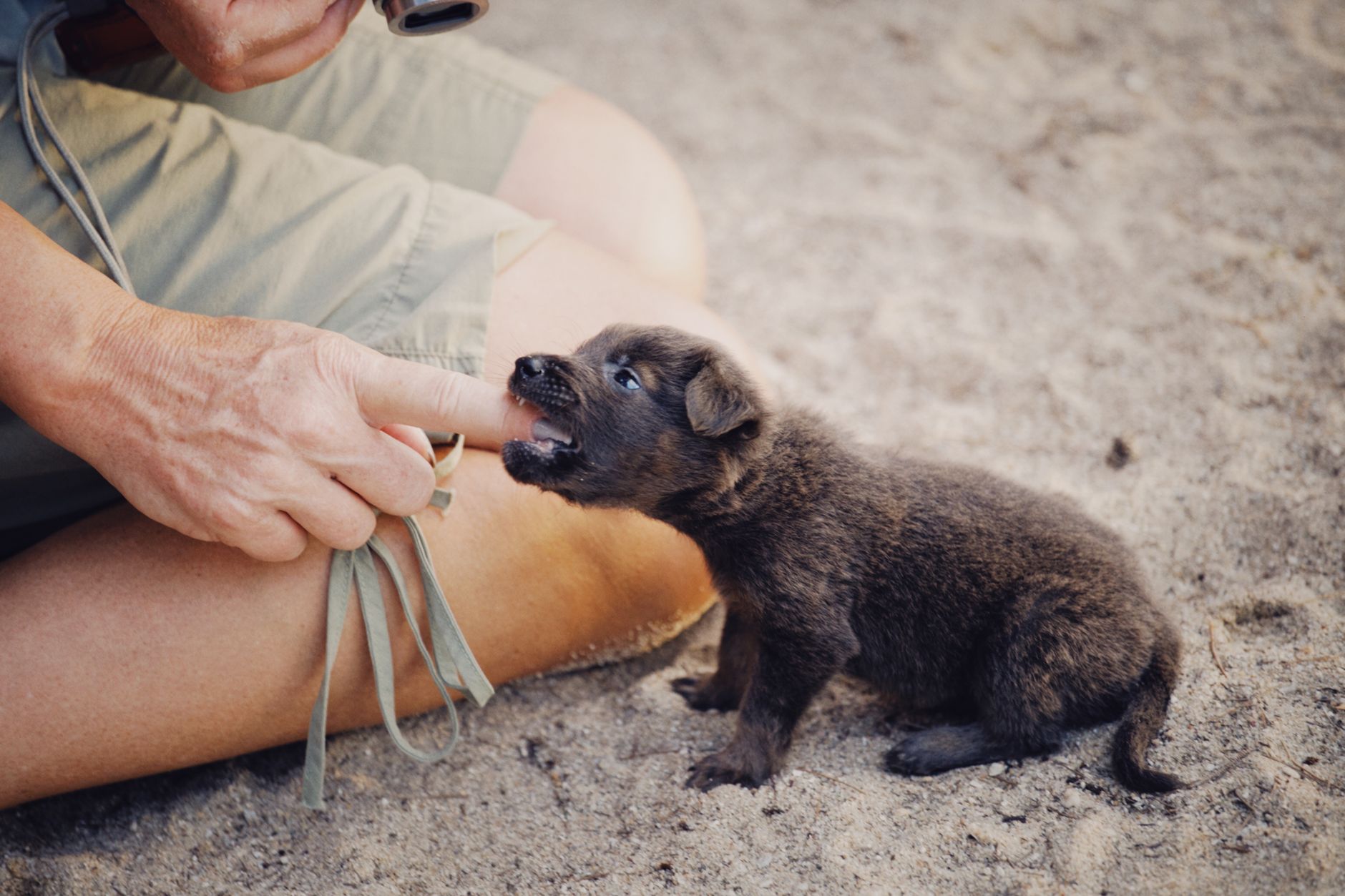
Puppies explore the world with their mouths, so biting hands, sleeves, or fingers is often part of normal development. Excitement, overstimulation, teething, and simple play can all make a puppy use teeth more than a family expects. That does not mean the puppy is being stubborn or dominant; it usually means the puppy still needs clear feedback about what is allowed. The goal is not to punish curiosity, but to teach that human skin ends the fun.
Look at the reason before choosing a response
Different biting patterns usually need different management. A puppy that nips briefly during play is often mouthing, while one that keeps chewing shoes or furniture may be dealing with teething or boredom. A puppy that gets rough very quickly may be overstimulated and need shorter play sessions, more rest, or calmer activities. Watching the timing, intensity, and setting helps the owner respond to the behavior itself instead of guessing at it. That makes training more consistent and easier for the whole household.
Stop the interaction the moment teeth touch skin
One of the most useful home strategies is to end attention immediately when biting starts. Hands should be withdrawn, play should pause, and the person should become boring for a short moment so the puppy learns that biting makes the game stop. A chew toy can then be offered as an acceptable replacement, which gives the puppy something appropriate to mouth. This works best when everyone in the home reacts the same way, because mixed messages can teach the puppy that biting sometimes works.
Teach what the puppy is allowed to bite
A puppy learns faster when the household gives a clear alternative, not just a list of prohibitions. Chew toys, tug toys, and age-appropriate teething items help redirect oral energy away from hands and furniture. Short training sessions, sniffing games, and structured play also reduce the chances that the puppy turns to biting out of boredom. In many homes, the biting problem gets worse when the puppy is under-exercised or overexcited, so daily routine matters as much as correction.
What not to do when a puppy bites
Loud yelling, rough pushing, and hand-wrestling often make the situation more exciting instead of calmer. For many puppies, fast-moving hands and dramatic reactions look like part of the game, which can reinforce the behavior. It is also easy for family members to accidentally encourage biting by using their hands as toys. A calmer, repeatable response is usually more effective than an emotional one, especially when the puppy is still learning boundaries.
When to seek professional help
If the biting becomes intense, persistent, or difficult to interrupt, it should not be treated as a simple play issue. Guarding behavior, stiffness, pain responses, or sudden changes in temperament can point to a deeper problem that deserves a veterinary check. A qualified trainer or veterinarian can help rule out discomfort, anxiety, or socialization gaps and build a more suitable plan. Early support is often easier than trying to fix the habit after it has become part of daily life.
Make the rules simple for the whole household
Puppy training works best when the rules are short, clear, and repeated by every person at home. No hand teasing, biting ends the game, and calm play earns attention are easy rules for everyone to follow. Puppies usually learn through repetition, so the household’s consistency matters more than perfect timing on a single day. When the family stays aligned, the puppy gets a clearer picture of how to behave and what kind of play is welcome.