Nail care is a small but important part of responsible pet ownership. Indoor dogs and cats spend most of their time on smooth floors, rugs and sofas, which rarely wear down their nails the way pavement or rough outdoor surfaces do. As a result, claws can become too long, leading to clicking sounds on the floor, unstable footing and nails catching on carpets or blankets. Overgrown nails may also make playtime rougher, increasing the chance of scratches to family members or other pets. This article walks through why regular nail checks matter, explains the basics of claw structure, and outlines practical steps for trimming nails at home. The information is for general education and does not replace personalized advice from a veterinarian.
Why dogs and cats need regular nail checks
When nails grow beyond a comfortable length, every step becomes less stable. Dog owners often notice a distinct tapping sound on hardwood or tile when nails are too long, while cat owners see claws snagging on furniture or clothing more often. In some cases, curved nails can press into the paw pad, making standing or walking less comfortable, especially for seniors or pets with limited mobility. Long nails are also more likely to catch during jumping or running, which could lead to torn claws. For households with children, keeping nails at a reasonable length can reduce accidental scratches during play. For cats, combining scratching posts with regular trimming helps direct natural scratching behavior to suitable surfaces instead of sofas and door frames.
Understanding claw structure and the “quick”
Before clipping, it is helpful to understand what is inside a pet’s nail. Most dogs have curved claws with a harder outer shell and a sensitive inner core that contains blood vessels and nerves, commonly referred to as the “quick.” On light‑colored nails, the quick often appears as a pinkish area toward the center of the claw, making it easier to see where not to cut. Dark nails are more challenging because the quick is hidden; in those cases, owners rely on shape and gradual trimming to stay in a safe zone. Cats have smaller, sharper claws that retract into the paw and extend when the toe pad is gently pressed. Their nails also contain a quick, but the safe trimming area near the tip is relatively short. When preparing to cut, examine each nail under good lighting, identify the translucent portion near the tip, and plan to remove only a small amount. Leaving a margin of safety is preferable to aiming for very short nails and risking pain or bleeding.
Choosing the right tools: clippers, scissors and grinders
There are three main types of pet nail tools used in home grooming. The first is the plier‑style clipper, which has angled blades and works well for small to medium dogs and most cats. The second is the guillotine‑style clipper, where the nail is inserted through a ring and cut by a blade sliding across; this design can be useful for thicker nails on larger dogs. The third is the electric grinder, which uses a rotating abrasive surface to slowly shorten and round off nails. Grinders are often chosen for pets that dislike the sudden pressure of clipping, but they do create vibration and sound that some animals need time to accept. For home use, owners should look for tools with non‑slip handles and sharp blades, since dull equipment may crush rather than cleanly cut the nail and cause discomfort. Keeping styptic powder or clean cotton on hand as a backup is wise, so minor bleeding can be managed calmly if it occurs. In case of more significant or persistent bleeding, contacting a vet is recommended.
Preparing the environment and your pet’s mindset
Many pets react more to the handling and restraint than to the cut itself, so preparation makes a real difference. A calm environment without sudden noises or distractions helps both the owner and the animal stay relaxed. Choose a time when the pet is more settled, for example after a walk or a play session, rather than when energy is high. Provide a stable surface such as a table with a towel or a non‑slip mat, or sit on the floor with larger dogs to make them feel secure. Throughout the process, speak in a steady, reassuring tone and use high‑value treats to reward cooperation and create positive associations with nail care. For very sensitive pets, desensitization can be useful: start by gently touching paws, then introduce the clipper or grinder without cutting, letting the animal get used to the sight and sound over several short sessions. Building trust gradually is often more effective than trying to trim all nails in one attempt.
Step‑by‑step nail trimming for dogs
When trimming a dog’s nails, body position and handling affect both safety and success. Small dogs can be placed on a table or held on the owner’s lap, while medium and large dogs are often easier to work with standing on the floor. Begin by gently holding the paw without squeezing too hard, allowing the nails to extend naturally. Place the clipper around the tip of the nail and cut at a slight angle, removing only the obvious excess length at first. On dark nails, it is safer to trim in very small increments, checking the cut surface after each clip. As the cut edge turns from hollow and pale to more solid and darker, you are approaching the quick and should stop. Nails that have been left long for months may have a quick that extends further, so shortening them has to be gradual over several sessions. Do not forget dewclaws—the nails higher up on the leg—which rarely touch the ground and often become overgrown if not checked.
Key differences and precautions for trimming cat claws
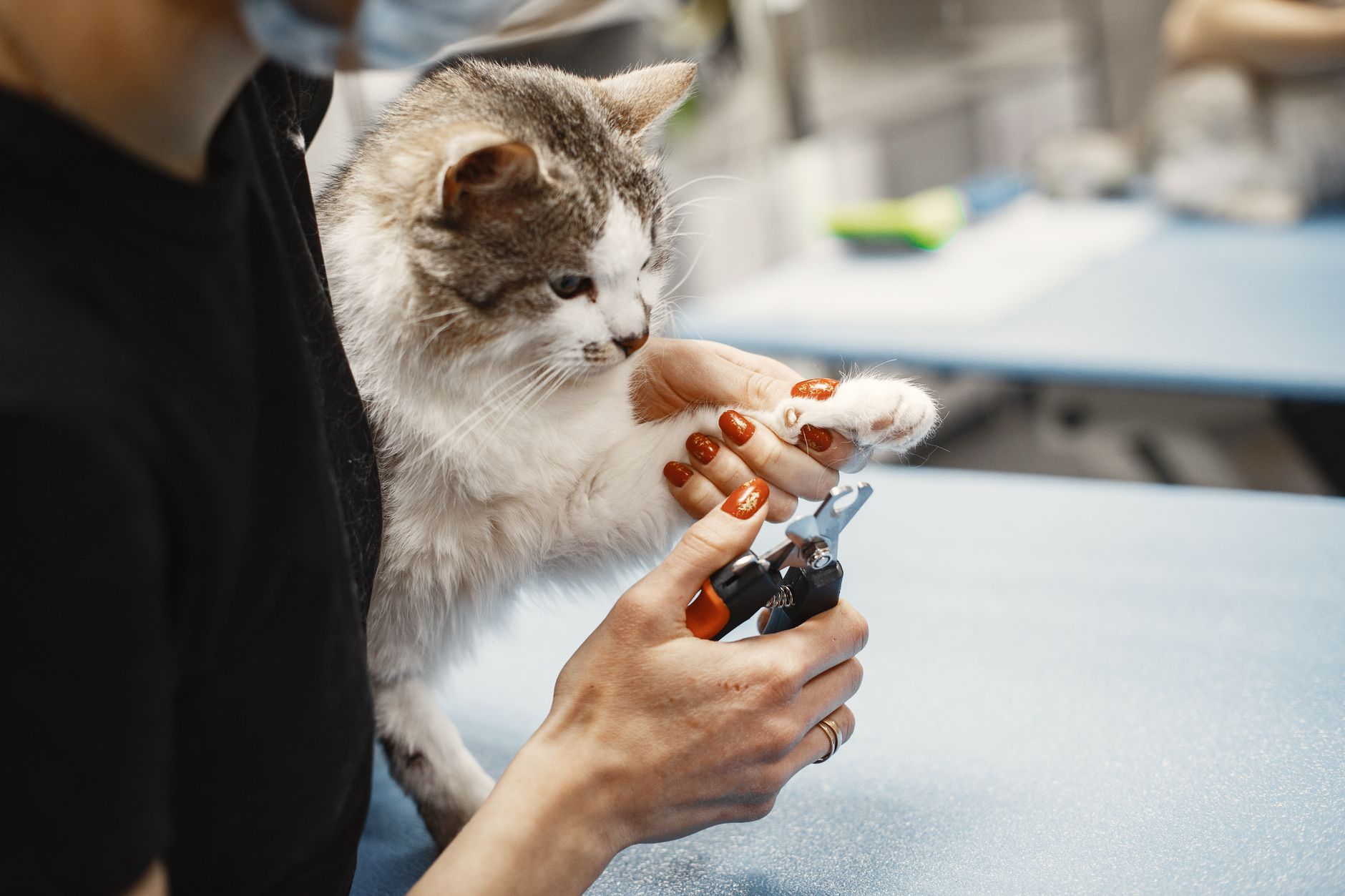
Cats’ claws behave differently from dogs’ nails, so owners need slightly different techniques. Most cats retract their claws when relaxed, so the owner has to gently press the toe pad between fingers to extend each nail. A small, sharp clipper designed for cats or small pets usually gives better control than large dog tools. When cutting, it is enough to trim off the clear, pointed tip and avoid cutting too close to the thicker, opaque area nearer the base. Unlike dogs, many cats use scratching posts daily and naturally maintain some level of nail wear, which may reduce but not eliminate the need for trimming. Highly anxious cats may struggle or try to escape, so breaking the task into several short sessions and rewarding with treats can help. If an owner feels unsure or if the cat becomes very distressed, asking a veterinarian or professional groomer to demonstrate proper handling can provide a safer starting point.
Common mistakes and when to seek professional help
A frequent issue in home nail care is the owner’s own nervousness. Hands that shake or movements that are rushed can startle a pet, making future sessions harder. Another mistake is using unsuitable tools, such as human nail clippers for thick dog nails, which may cause splitting or crushing rather than clean cuts. Some owners also aim to cut nails as short as possible in one session, increasing the chance of hitting the quick and causing pain. Once an animal has experienced significant discomfort during nail care, it may resist handling more strongly the next time. Pets with certain health conditions, such as bleeding tendencies or joint problems, and those that are extremely fearful may be better served by professional grooming or veterinary visits. During a clinic visit, the vet can also assess paw pads, nail shape and overall limb health. All guidance in this article is general; for decisions about a specific pet, professional input is advisable.
Building a long‑term, low‑stress nail care routine
Healthy nail care works best as a regular routine, not an occasional emergency measure. Many dogs benefit from nail checks every three to four weeks, while suitable intervals for cats depend on activity level and how often they use scratching posts. Owners can make nail inspection part of everyday interaction, such as gently handling paws during cuddle time or after brushing. The goal is to treat nail care like brushing teeth or combing fur—a normal, repeated piece of basic hygiene rather than a rare, stressful event. With appropriate tools, patient handling and positive reinforcement, many pets learn to tolerate or even calmly accept nail trimming over time. If questions arise about technique, frequency or a pet’s reaction, discussing them with a veterinarian or experienced groomer can offer tailored recommendations. Information in this guide is meant to support thoughtful care but does not replace professional medical advice.