A cat scratcher or scratch post is more than a cute accessory. It is part of a cat’s daily routine, giving them a place to stretch, mark territory, and redirect the urge to scratch furniture. When a product goes unused, the problem is often not the cat’s personality but the design, placement, or texture.
Watch how the cat actually scratches
Cats do not scratch for one single reason, so the best product depends on how they move. Some cats like to stretch upward and pull on a vertical surface, while others prefer a flat board they can rake with both paws. A cat that keeps hitting the sofa arm or carpet edge is already showing a clear preference, and that clue is more useful than any packaging claim. A good first step is to observe the cat’s favorite scratching angle, then match the product to that natural motion.
Material should match the cat’s taste
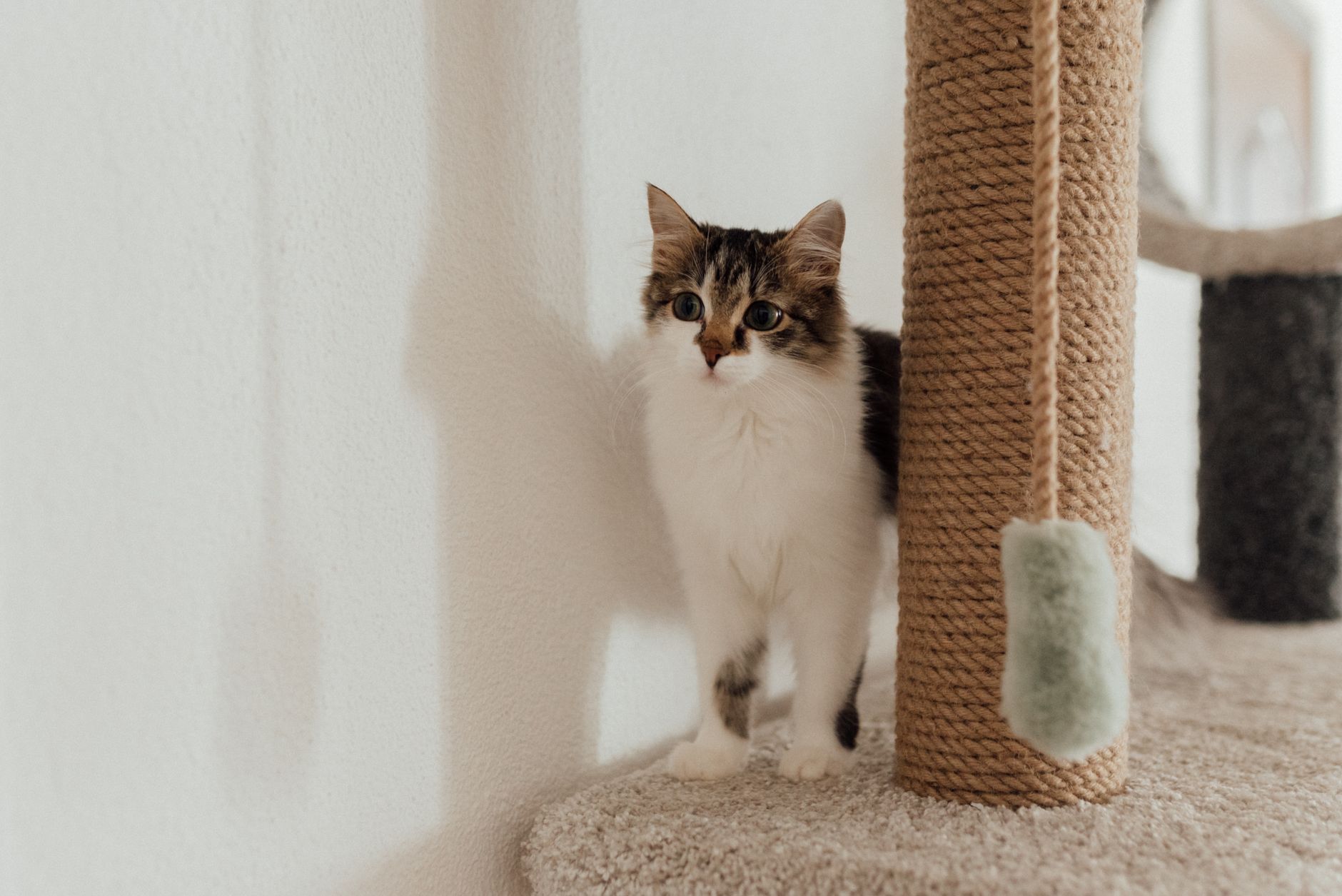
Scratchers commonly come in corrugated cardboard, sisal rope, fabric, or wood-framed designs. Cardboard gives a crinkly texture and is often appealing to cats that enjoy tearing paper-like surfaces. Sisal rope is common on posts and works well for cats that like a strong vertical pull. Fabric-covered options can blend better with home decor, but the surface still has to feel interesting enough for the cat to return to it. If the cat already targets a specific sofa or rug, choosing a similar texture often works better than picking the most stylish option.
Height, weight, and base stability matter more than looks
A scratch post that wobbles can feel unsafe, especially to a confident cat that pushes hard with its front legs. The base should be heavy enough to stay in place, and the post should be tall enough for a full-body stretch rather than a cramped half-grab. Larger cats and energetic younger cats usually need more structure, because a short or flimsy post can tip or slide during use. In practical terms, the best-looking model is not always the best-performing one; stability is often what decides whether the cat keeps coming back.
Placement can make or break adoption
Even a well-made scratcher will be ignored if it is hidden in a corner the cat rarely visits. Cats often scratch right after waking up, near sleeping spots, or along busy living-room routes where they naturally pass by. That is why putting a scratcher beside the cat bed, next to the sofa corner, or near a favored window spot usually works better than putting it in a quiet storage area. In multi-cat homes, more than one scratching location can reduce competition and make the resource feel easier to use.
If the cat ignores it, adjust the setup before replacing it
A neglected scratcher does not always mean the product is wrong. The base may slide, the post may be too short, the angle may feel awkward, or the cat may simply need a stronger cue. Moving the scratcher closer to the furniture it was meant to protect often helps, because the cat can switch to the approved surface without changing location. Some owners also place a toy nearby or encourage the cat right after a nap, when scratching behavior naturally appears. Small changes in setup often matter more than buying a completely new product.
A practical way to choose a better scratcher
The most useful question is not whether the item looks good in the room, but whether it fits the cat’s body and routine. Start with the scratching angle, then check texture, then confirm that the base is solid and the size is large enough for a full stretch. If the budget is limited, a simple and sturdy model is usually a safer bet than a decorative one that wobbles or feels too small. For cat owners, the best scratcher is the one the cat returns to every day, not the one that matches the sofa.