For most indoor cats, a well designed cat tree can make a bigger difference than many toys, because it reshapes their vertical living space. Cats naturally like to observe from above, retreat to hidden spots when stressed and claim certain perches as their safe territory. Modern apartments often have limited floor area, so using height to add resting and lookout points is a practical way to enrich the environment. However, the huge variety of products online means owners may be tempted by looks or price alone, overlooking key details such as stability, materials and placement. This article focuses on three pillars – height, materials and stability – and frames them in a way similar to what many vets discuss when warning about home accidents. The goal is to give owners a structured checklist they can treat as general information, then bring to their vet or behaviour professional when they have specific concerns.
Why a cat tree matters in an indoor environment
A cat tree is not just decoration; it is part climbing frame, part hideout and part vantage point. In homes where cats stay indoors most of the time, a tree offers alternative routes other than the floor, helping them move around, rest and observe the household without always being in the middle of human traffic. Many cats feel more secure when they can watch people and other animals from a height, or retreat to a semi-enclosed perch when visitors arrive. Behaviour cases seen in clinics often show that lack of appropriate vertical space is linked with stress signs such as hiding, tension between cats and changes in daily habits. When the environment is adjusted and suitable perches are added, those signs may ease as part of a broader plan. It is still important to remember that changes in furniture alone are not a treatment; owners should treat this guidance as a reference and contact a veterinarian or qualified behaviour consultant if their cat already shows health or behavioural issues.
Choosing the right height: age, size and mobility
Selecting height for a cat tree should begin with the cat, not the furniture catalog. Young, healthy adult cats with good joint function typically enjoy taller structures with multiple levels, as long as the gaps between platforms are not too large, which would force big jumps or awkward landings. For kittens and senior cats, a medium height around the level of a human chest or shoulders is often more manageable, especially when ramps or shallow steps are included to reduce strain. Large breeds or heavier individuals need wider platforms and stronger posts, otherwise they may feel unstable or even slip off narrow surfaces. Owners also need to consider ceiling height and nearby fixtures: a very tall tree placed under a hanging light or close to curtains can create unforeseen risks if a cat gets excited and tries to grab or swing. Thinking about how the cat already moves through the room, then matching tree height to that pattern, is usually more useful than aiming for maximum size.
Materials that matter: posts, coverings and hardware
The materials of a cat tree determine how long it lasts and how pleasant it is for a cat to use. Common core structures include solid wood, thick particle board and metal tubing, each with different weight, cost and stability profiles. Heavier structures made of solid wood or dense boards tend to wobble less when a cat jumps, but they are also harder to relocate. Surface coverings are often plush fabric, canvas-like textiles or paper rope, and each has its pros and cons in terms of how easily fur sticks and how simple cleaning is. Scratching posts wrapped in sisal or paper rope should be examined for tight, even winding; loose ends, gaps or sharp staples are warning signs. Hardware such as screws, bolts and brackets is equally important: if plates arrive with cracks, misaligned holes or flimsy metal connectors, it is better to stop assembly and contact the seller than to install something that may fail later. Vets frequently remind owners that many injuries at home start from small issues like a broken board or exposed sharp edge that went unnoticed.
Checking stability: base design and movement paths
Stability is one of the most practical safety concerns and should be checked before letting a cat climb freely. The higher and more complex the tree, the more it depends on a broad, heavy base or wall anchoring to stay firm. After assembly, owners can gently push the tree from different angles to feel for wobbling or creaking; noticeable movement from light pressure suggests screws are not fully tightened or the design may be inappropriate for the chosen spot. Placement also influences stability. A tree beside a frequently used hallway, next to a swinging door or under a window that is opened often can be bumped, shaken by wind or blocked during urgent movement. Designing paths so that cats have a clear route to their tree, while people can walk through the room without brushing past it, reduces chances of sudden fright or collision. These checks take only a few minutes but can greatly lower the risk of falls, especially in homes with children or multiple animals.
Multi-cat homes and limited space: sharing vertical territory
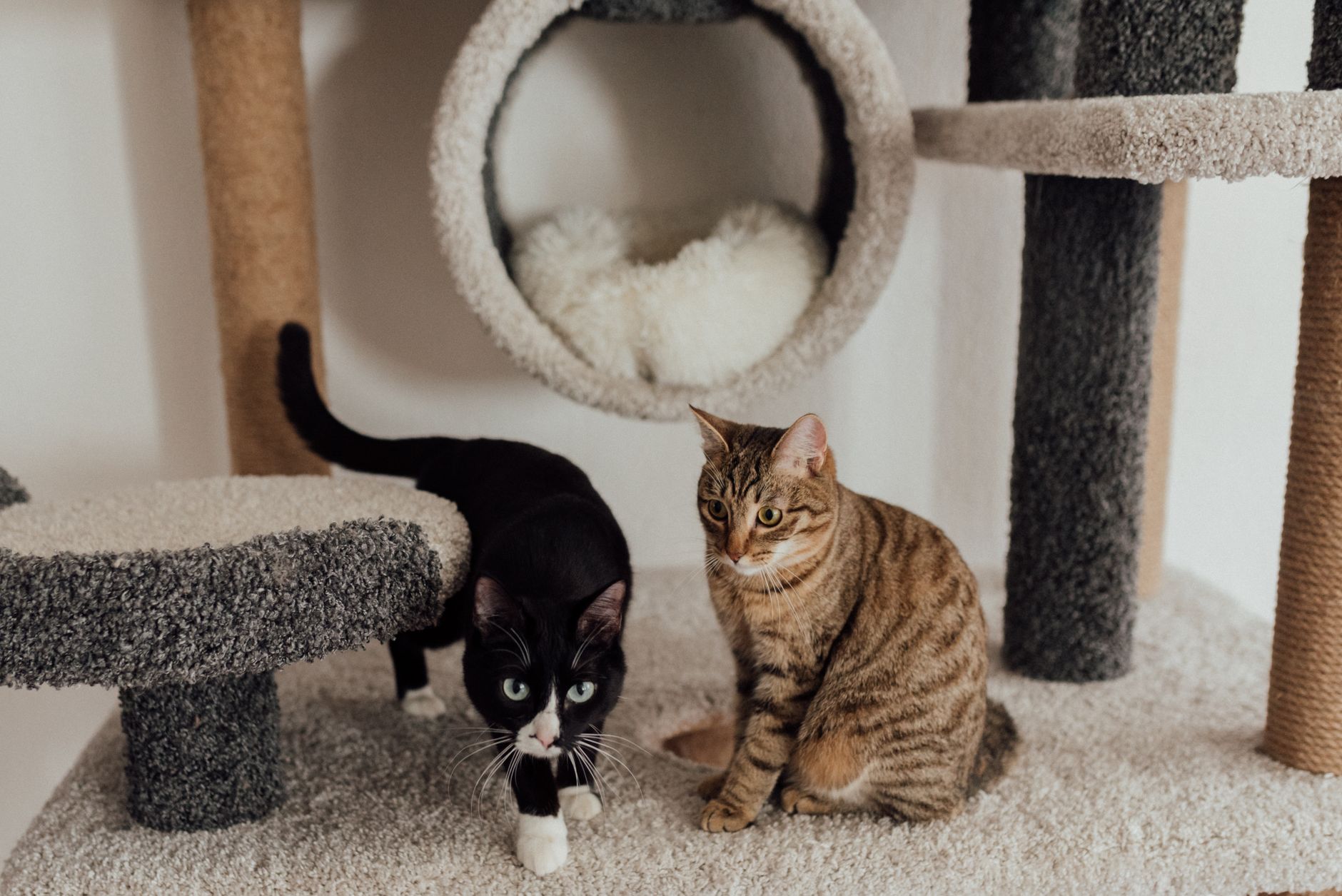
In households with more than one cat, a tree becomes a shared resource and part of their social landscape. Multiple levels allow cats to occupy different heights, which some individuals use to maintain comfortable distance from each other. If platforms are too small or placed face-to-face without escape routes, tension may increase when two cats arrive at the same perch. Owners in small apartments can look for narrow, wall-hugging designs that still provide several resting spots, including at least one semi-enclosed "safe corner" on an upper level for shy or stressed cats. The overall room layout should ensure that the tree does not block doors or emergency exits, while still giving cats a clear vertical path. If adding a tree coincides with new stress behaviours such as hiding, avoidance or litter box changes, it is wise to pause and discuss the situation with a vet or behaviour specialist. The advice in this article is intended as general guidance only and cannot replace an individual assessment.
Assembly and ongoing checks: part of owner responsibility
Assembly and maintenance are often overlooked aspects of cat tree ownership, yet they are closely tied to safety. When building a new tree, owners should follow instructions step by step, making sure each post is screwed in fully and plates are aligned properly. If holes do not match or parts feel forced, it is safer to stop rather than push components into place and risk hidden cracks. Once the tree is ready, allowing the cat to explore gradually while the owner watches how it moves and listens for noises can reveal spots that need tightening. Over time, regular checks every month or two for loose screws, unstable posts or torn fabric help catch wear before it becomes dangerous. Cleaning should use mild products with smells that cats tolerate, avoiding strong fragrances that may cause them to avoid the tree. Any safety recommendation remains a general reference; if a cat slips, falls or shows pain after using a tree, immediate veterinary care and professional advice on environment changes are strongly recommended.
Final thoughts: safety and comfort before style
Cat trees are often marketed by their style and size, but from the cat’s point of view, comfort and safety come first. A tree that matches the cat’s age, mobility and confidence level, built from sturdy materials and placed in a thoughtful location, usually offers more long-term value than an impressive but poorly suited tower. Many vets and behaviour professionals emphasise that environmental design is one tool among several for supporting feline wellbeing, alongside proper medical care, nutrition and social management. Owners can use the points in this guide as a structured checklist when browsing products or adjusting their home, while remembering that health, behaviour and safety questions are best answered by qualified experts. Treat the information here as a starting point for discussion, and let each cat’s unique needs guide final decisions.