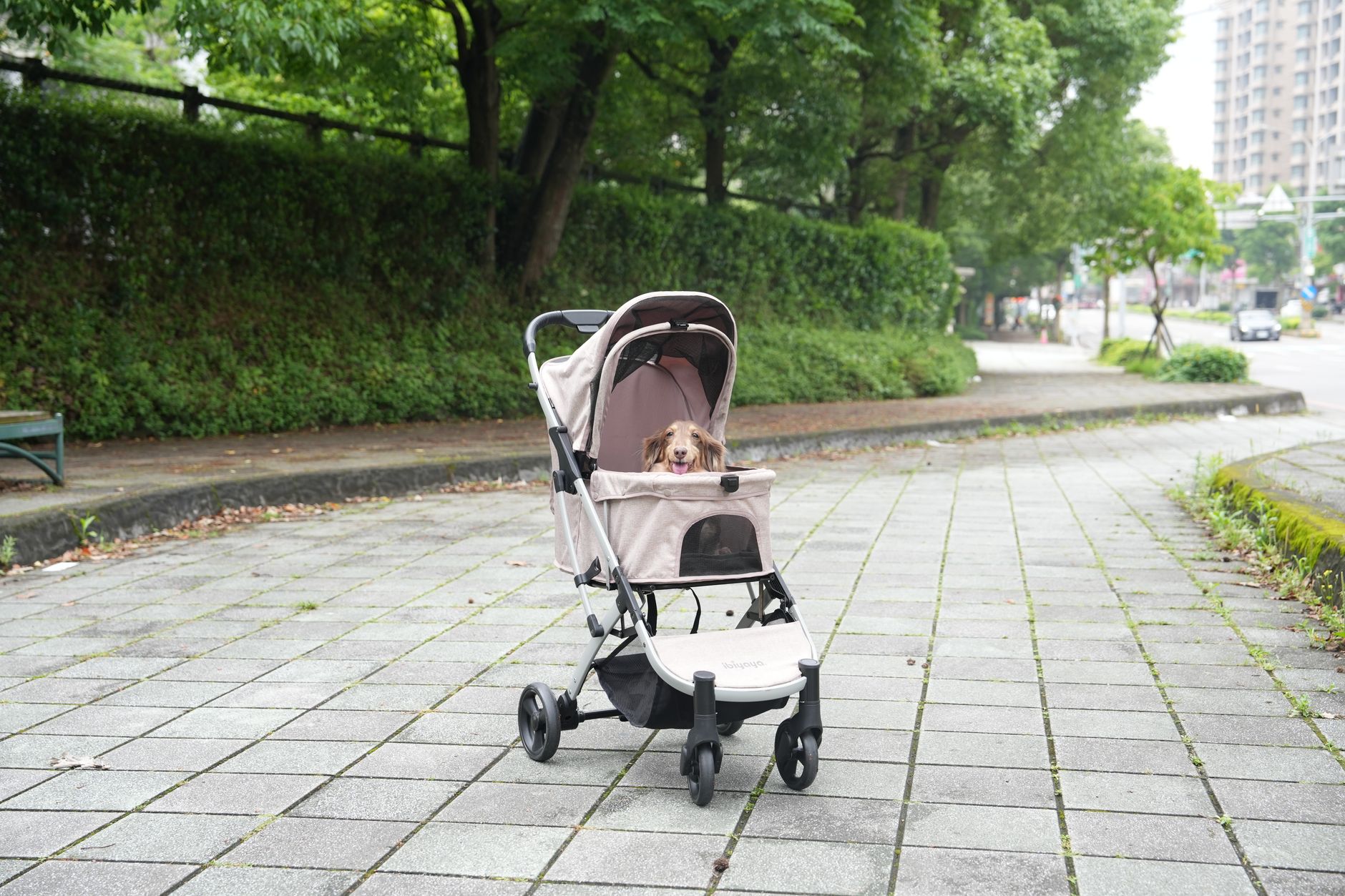
For many dog and cat owners, a pet stroller or carrier bag becomes part of everyday life once outings go beyond a quick walk around the block. The challenge is that these tools look similar on the surface but serve very different purposes. Some families mainly stroll through busy downtown streets and pet-friendly malls, while others often ride public transport or take road trips, and each routine calls for different gear. Before buying anything, it helps to step back and ask: what does a typical week of going out with this pet look like, and what is the animal’s age and health status? Once those basics are clear, it becomes easier to decide whether a stroller, a carrier bag, or a mix of both will provide realistic comfort and safety for both pet and owner.
When a pet stroller shines: crowds, long distances and limited mobility
A pet stroller is most useful in environments where the ground is busy and the walk is long. Large events, outdoor markets, pet expos and shopping malls all tend to have uneven flooring, moving crowds and unexpected noise. In those settings, small dogs and cats can be stepped on, startled by children running past or overwhelmed by strangers trying to touch them. A stroller offers a semi-enclosed space where the animal can watch what is happening without being directly in the crowd, while the owner focuses on steering and navigation. Strollers are also valuable for senior pets, animals recovering from surgery or those whose joints and stamina are not up to a full outing. They are not a medical treatment, but simply another way to let a pet be present without having to walk the whole route. If a pet has existing health issues, the length and frequency of stroller outings should be discussed with a veterinarian; the examples in this article are general scenarios for owners to think about, not individual medical advice.
When a carrier bag makes sense: short moves and close contact
Carrier bags, including front and side carry designs, tend to work best for shorter distances and situations where the owner needs free hands and close contact. Typical examples include walking from home to a nearby café, riding a scooter, or boarding a bus or subway. For nervous animals, being close to the owner’s chest or hip, hearing a familiar heartbeat and smelling a known scent can be reassuring. Soft bags also take up less floor space than a stroller, which matters in tight hallways or crowded train cars. However, the pet’s weight is carried by the owner’s shoulders and back, so a bag that seems fine for a ten-minute walk might feel very different after an hour in transit. People with back or joint problems may need extra caution and should talk to their own healthcare professionals about safe weight limits and carrying styles. The purpose of this section is to highlight ergonomic considerations and comfort, not to provide a medical recommendation for owners.
Getting size and weight right: more than just a number on the label
Weight limits printed on strollers and carrier bags are only one piece of the puzzle. The way a pet fits inside, and the positions it can adopt, matter just as much. A carrier that technically supports the right number of kilograms may still be too narrow, forcing a cat or dog into a twisted posture for the whole trip. Likewise, a stroller with cramped dimensions can make it difficult for a pet to turn around, curl up, or stretch a little, which can increase stress over time. A more practical approach is to measure the animal in its usual lying, sitting and standing positions and compare those measurements with the inner dimensions of the product. Multi-pet households should consider whether two animals will ever share one stroller and, if so, build in space and load margin to avoid crowding. For pets with specific orthopedic or spinal conditions, the choice of stroller floor and carrier posture may need to follow veterinary guidance; this article focuses on everyday fit and comfort and is not a substitute for a clinical assessment.
Safety features and materials: ventilation, stability and cleaning ease
The safety design of a stroller or carrier bag plays a major role in how secure and comfortable outings feel. On the ventilation side, the amount of mesh, the size of openings and the number of windows determine both airflow and visibility. In warm climates or during summer, poorly ventilated fabric can trap heat and make animals pant or pace more quickly. Stroller frames, brakes and wheel construction influence how stable the ride is on uneven surfaces and how likely tipping or sudden jolts might be. For carrier bags, strap width, padding and contact points affect how pressure is distributed across the shoulders and torso. Cleaning characteristics also matter in real life: removable liners, wipe-friendly surfaces and any waterproof layers can make it easier to keep the inside hygienic after drool, shedding or accidents. Whenever possible, owners benefit from visiting a store to push a stroller over different floor types, try folding it, or put on an empty carrier to feel how the straps sit before committing to a purchase.
Matching gear to lifestyle: drivers, riders and walkers
Everyday transportation patterns strongly shape which tool will be practical. Owners who mostly drive need to check whether a stroller can fold to fit the trunk or rear seat without complicated disassembly, and some choose to pair a compact stroller with a hard travel crate so the pet rides in the crate and transfers to the stroller at the destination. People who rely on scooters, buses or trains often lean toward carrier bags or backpack-style designs that they can carry up stairs and through stations while keeping one hand free for tickets or rails. Walkers who stay close to their neighborhood may face different constraints, such as narrow sidewalks, curb cuts or local shop policies. Some pet-friendly venues only allow animals in strollers, while others accept carrier bags but not open baskets or arms-only carrying. Checking rules in advance can reduce friction at the door. A simple way to decide is to write down the most common outings in a typical week, including distance, terrain and transport mode, and then choose equipment that fits those patterns rather than rare special trips.
Helping pets adjust: gradual practice and watching for stress signals
Even a thoughtfully chosen stroller or bag can cause stress if it is introduced too abruptly. Before planning a big day out, it is helpful to let the new item sit open at home so the pet can sniff and explore on its own terms. From there, owners can use small treats and calm praise to invite the animal to step in and out, slowly increasing the time inside without closing zippers or covers right away. If the pet shows signs such as continuous panting, hiding, intense struggle, or attempts to bite when placed in the carrier, those are signals that the pace is too fast or that the setup feels unsafe to the animal. Sensitive dogs and cats, or those with a history of difficult outings, may need a longer adjustment period or fewer outside trips overall. In cases where stress responses are strong or persistent, consulting a veterinarian or qualified behavior professional is recommended; the training ideas here are general suggestions meant to support everyday observation, not a full behavior plan.
Final thoughts: balancing pet comfort with owner practicality
There is no single right answer to whether a stroller or carrier bag is “better.” The real question is which combination works for this particular pet and this particular household. Some owners keep a lightweight stroller for long, crowded days and a simple carrier bag for short moves, while others find that one well-chosen product covers most needs. Whatever the setup, the priority is that the animal has a reasonably predictable, secure space during outings and that the owner can handle the weight, steering and cleaning without undue strain. The scenarios and tips in this article are intended as general guidance to support planning and responsibility. For any pet with existing medical or behavioral concerns, and for owners with health questions related to lifting or walking, discussing plans with appropriate professionals remains important, and the information here should be used as a reference rather than a guarantee of outcomes.